
Businesses urged to treat water as critical backup infrastructure as South African outages rise
Written by: BizCommunity Editor Save to Instapaper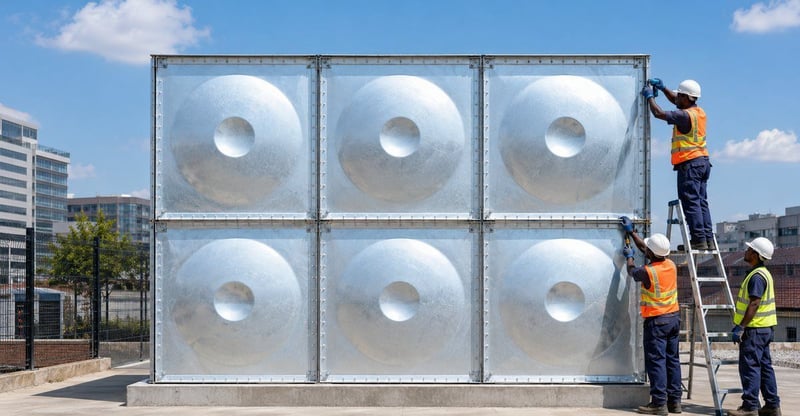
Generators, solar panels, inverters and battery systems are now a normal part of doing business. But there’s another basic service that can bring operations to a halt when it disappears: water.
A business can usually get through a power cut if it has backup power. Keeping things running without water is much harder.
Staff need drinking water, somewhere to wash their hands and toilets that work. For restaurants, hotels, factories and other water-dependent businesses, the problem gets bigger. Water may be needed for cleaning, production, cooling, food preparation, fire protection or simply serving customers.
That makes backup water something businesses need to plan for, rather than something to deal with once the taps run dry.
A water outage can stop more than you think
According to Abeco Tanks, water storage should be treated as part of a business’s infrastructure, rather than an emergency purchase after the supply has already failed.
A reserve gives businesses some breathing room during municipal outages, maintenance, infrastructure failures or periods when supply is reduced.
South Africa’s water systems are under strain, ageing infrastructure, growing cities and overloaded municipal networks mean water cuts can happen with little warning. When the water eventually comes back, that doesn’t always mean business as usual. Low pressure and an unreliable supply can still cause problems.
For an office, no water could mean sending employees home because the toilets can’t be used.
For restaurants and hotels, no water can mean scaling back services or shutting the doors until the supply returns. Schools and healthcare facilities face obvious sanitation problems, while factories lose production time and constructions sites can grind to a halt.
Waiting for an outage can cost more
This is no longer a hypothetical risk. Water shortages have already left some businesses without running water for days.
Lost sales and downtime are obvious costs, but they’re not the only ones.
There’s also the price of arranging emergency water deliveries, finding temporary storage and dealing with work that couldn’t be completed.
A hotel that keeps cancelling bookings because there’s no water won’t keep customers for long. A factory with no water may have to stop production, which means missed deadlines and delayed orders. And in businesses where hygiene matters, a water outage can quickly turn into a compliance problem.
Then there’s the cost of sorting it out at the last minute. Emergency water deliveries and temporary tanks can get expensive, especially when everyone in the area is looking for the same thing. Having backup water already in place saves you from that scramble.
How much back up water does a business need?
There’s no useful one-size-fits-all answer.
A small office might only need enough backup water for drinking, handwashing and toilets. A hotel, factory, shopping centre or food-processing plant is a different story. Their daily water use can be much higher.
That’s why tank size should be based on what the business uses, not simply how much space is available.
Look at a normal day. How much water does the business go through? What still needs to run if the municipal supply goes off? And how long does the backup need to last?
Once you know that, it’s much easier to work out how much water you need to store.
Then there’s the practical stuff. Where will the tanks go? How will they be filled? Does the water need to be treated? And how will you get it from the tanks to where it’s needed?
Space is often the tricky part, especially in an existing building. If there isn’t room to bring in one large tank, modular or sectional tanks can make more sense.
Buying a tank isn’t the end of the job
A water tank sitting behind the building doesn’t automatically give a business a reliable backup water system.
The rest of the setup matters.
The tank is only one part of the setup. You still need pumps and pipework to get the water where it needs to go, and depending on what it’s being used for, you may need filtration too.
The system also needs regular maintenance. Tanks need cleaning and pumps need testing. The last thing you want is to discover the pump isn’t working when the municipal supply is already off.
It’s also worth keeping an eye on how much water you’re using. That makes leaks easier to spot and gives you a better idea of how long your backup supply will last.
Treat water the way you treat backup power
Most South African businesses no longer wait for a power cut before thinking about backup power. Water deserves the same planning.
Start by working out how much you rely on municipal water. What absolutely needs to keep running if the supply goes off? How much water does that take, and how long do you need your backup to last?
A backup system won’t fix the problems with the municipal supply. It simply gives you time. Instead of shutting down as soon as the taps run dry, you can keep the important parts of the business going.
Because water cuts happen. The bigger question is whether you can keep operating when they do.
Get new press articles by email
The Pulse Latest Articles
- The 1% Problem: Are We Misjudging Cryptocurrency? (September 7, 2026)
- N3yh Moves Beyond Sleepwear With Its First Leisurewear Collection (September 3, 2026)
- N3yh Moves Beyond Sleepwear With Its First Leisurewear Collection (September 2, 2026)
- Safari Travelers Are Asking What Happens Beyond The Game Drive (September 2, 2026)
- Kruger National Park Is Waking Up For Spring (September 2, 2026)