
Brands Must Earn Gen Z Trust Through Cultural Fluency And Authenticity
Written by: BizCommunity Editor Save to Instapaper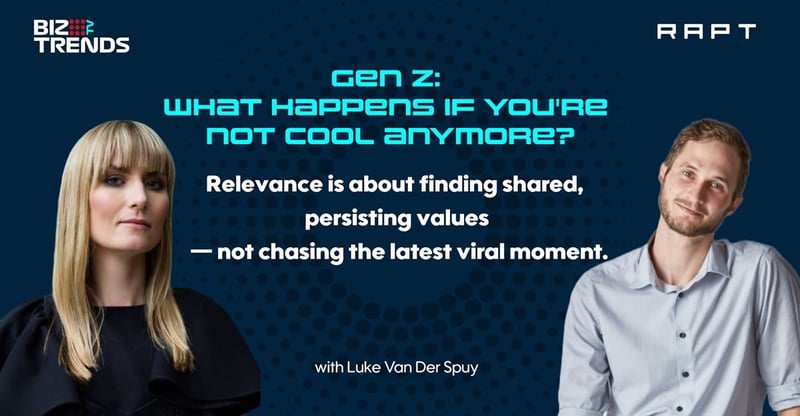
Delving into this is Luke van der Spuy, senior strategist at The Culture Foundry Company, an agency that specialises in youth culture, amongst others, and has studied Gen Z across the continent for years.
For him, the bottom line is that brands can be relevant to Gen Z by being more culturally fluent, human first, and trusted as sources of knowledge, rather than chasing visibility.
Let’s start with where this generation is today. Gen Z has grown up. Today, Gen Z is a cohort of young adults, in their early 20s to 30s.
“They are not as young as they used to be and are maturing. They're no longer quite so novel, and nor should they be so mysterious. They have been living and working and voting with us for some time,” he says.
The Great Flattening
If we then bring in the Great Flattening trend, which refers to the globalisation and mainstreaming of the internet through which life stages are extending and values becoming more shared amongst different generational cohorts, we see that relevance now is a lot more about finding those shared, persisting values, not so much just fixating on and attaching to the latest viral moment or trend.
This, he says, is what brands need to prioritise, and not the latest hot moment or trend.
“Modern brands lack identity because they chase the latest hot moment or latest trend. Instead of looking at consumers engaging consistently over time, brands often gauge their relevance by looking at how many views, likes, and comments their latest campaign gets.
"Then, we can add in the flattening of content as well as of class and economic class structures in society, we see that people who used to have surplus cash now find themselves having to work a little bit harder to stay where they are, with all the inflation and concentration that's going on in the world."
This, he says, has made coolness a little bit more intrinsic.
What this means is that Gen Z is at that critical stage of leaving the chronically online or finding how the real world fits into the chronically online.
He believes brands almost have a role to help them bridge that, to get grounded and be ready to cope with not being the cool generation anymore.
Community as the future of brand
“Gen Z, particularly in the South African context, don't necessarily want brands to sit with them, or be their friend or to be in their community or part of their community.
“They want brands to serve them, to serve a part of their identity and part of their status, or to serve a purely utilitarian purpose based on value.”
He makes the point that it's a wild landscape to navigate and the fine line is between responding to a trend and then being seen as authentic or not.
Gen Z and AI
AI is a point in case.
“When it comes to the intersection of Gen Z, brand, and AI, there's a real contradictory dynamic, where some young people feel a bit overwhelmed, and there is this real peer pressure element and this fear not only of being left out, but that they are missing something really powerful.”
But these same young people, when viewing sponsored social media posts that are so clearly AI-generated, go, "AI slop, AI slop. Get this AI slop off my feed”.
“Gen Z are looking to brands to lead with responsible AI usage. If my favourite brand fires their lead designer to replace it with AI, that’s a huge red flag for them, and it doesn't bode well.”
He adds, “I think young people are hoping brands will do the right thing, and prioritise human talent, and show us what responsible AI usage looks like."
Dead Internet Theory
Young people are also worried that we will get to a point where brands on the internet are almost like islands of self-sustaining, self-managing entities, and they don’t want that.
“It's a massive acceleration of that Dead Internet Theory. The more that AI is involved in brand communication processes, the more the desire for humans to speak to other humans.”
A delicate dance
He believes we will go back to the basics of connecting with people.
“It's a delicate dance, but that's where brands come in. Brands need to navigate this balance between technology and humanity, between being cool and being credible, and all these different nuances to play in this strange new world we're all building together."
Looking forward to new generations, he says we are in an era of complete oversaturation, and that's why brands fight so hard for virality, even when they might realise that it's not the best route to credibility.
“Because you're fighting for a moment of your consumer's attention.
“My prediction, very broadly, is that we might move towards a somewhat more curated brand space on the internet.
“We are going to keep seeing more subtle manifestations of brands finding ways to capture attention from people without just being in their faces all the time.”
RAPT BizTrendsTV
BizTrendsTV is a collaboration between Bizcommunity, Rapt Creative and The Real-Networks consortium, and the first-of-its-kind trend show focusing on global topics impacting future socio-economic trends from a uniquely Afrocentric perspective.
Hosted by a leading voice in the African business trend ecosphere - fast-talking, fast-thinking Bronwyn Williams - futurist, economist, future finance specialist and business trends analyst - in conversation on trending topics such as AI, influencer farming, billionaire bunkers, distraction democracy, Gen Bees, hyper-capitalism, trade wars, exclusionary geopolitical policies, hot wars and more with leading PanAfrican futurists.
A new episode is available on the last Tuesday of every month on Bizcommunity and via The Real Network digital platforms.
Get new press articles by email
We submit and automate press releases distribution for a range of clients. Our platform brings in automation to 5 social media platforms with engaging hashtags. Our new platform The Pulse, allows premium PR Agencies to have access to our newsletter subscribers.
Latest from
- S&P PMI Shows Output Growth In South Africa Despite Drop In Orders And Business Confidence
- South African Airways Announces CEO Resignation After Successful Rebuilding Period
- GCIP SA Awards Spotlight Breakthrough Green Technologies And High Impact Startups
- Old Mutual Launches Khokha Umoya To Support Families With Dignity And Care During Bereavement
- Industry Leaders Raise Alarm Over Exclusion Of African Talent From Key Energy Platforms
- Rogerwilco Report Reveals Shift In Automotive Marketing As Digital Conversations Drive Buyer Choices
- Nedbank Sun International And MTN Foundation Back Act Nyoloha Scholarships For Future Artists
- Government Highlights Bolobedu Solar Plant As Model For Clean Energy And Inclusive Growth
- Axe Introduces Fine Fragrance Collection Designed For Long Lasting Freshness And Modern Appeal
- World Bank Insights Highlight Importance Of Structured Home Learning Environments For Child Development
- World Bank Revises Africa Growth Forecast As Global Instability And Debt Pressures Mount
- New Insights Show High Attention Campaigns Boost Market Share While Testing Reduces Risk
- Harley Davidson Introduces Ride As Global Brand Platform Celebrating Motorcycling Experience
- Effie And Ipsos Unveil 2025 Trends Report Showcasing What Drives Real Marketing Effectiveness
- FirstRand Completes Pioneering Shariah Compliant Deal For Major South African Property Development
The Pulse Latest Articles
- Interpol Warns Of Global Crime Networks, Sa Businesses Urged To Rethink Detection (April 10, 2026)
- Adaptive Leadership In Motion: Why Logistics Needs A Different Kind Of Strength (April 9, 2026)
- Ai Isn’t Shrinking Marketing Jobs - It’s Exposing A Bigger Talent Crisis (April 8, 2026)
- Stones Safaris Unveils A New Approach To Safari Through Experience-led Activities (April 8, 2026)
- Bright Beginnings Preschool Celebrates Linden Campus (April 2, 2026)