
New Education Trends Signal A Move Away From One Size Fits All Schooling In South Africa
Written by: BizCommunity Editor Save to Instapaper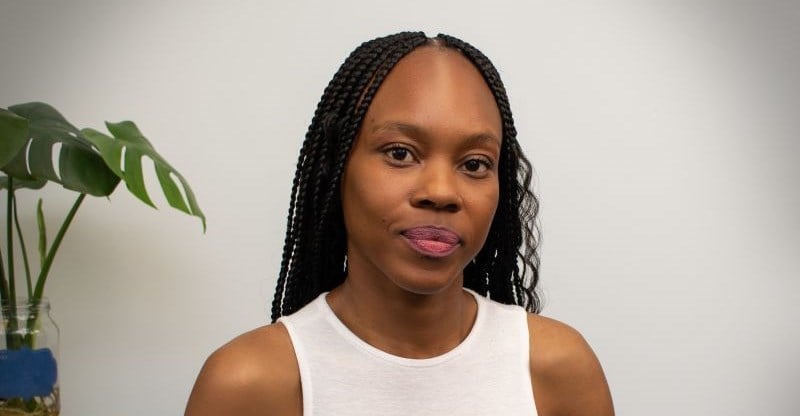
Khomotjo Mashele, Head of product: high schools at Spark Schools
Employers are calling for technologically adept self-starters, adaptable problem-solvers, and emotionally intelligent collaborators, but the predominant schooling model was designed for a different era.
But, across the country and globally, new trends that aim to create a more dynamic, equitable system of education are coming to the fore:
1: Learning designed around the scholar, not the schedule
One-size-fits-all teaching is no longer fit for purpose. Scholars develop at different paces, have different strengths, and engage with content in different ways. Moving them through the curriculum at the same speed benefits some, but limits and overwhelms others.
The emerging trend is personalisation: schooling that structures itself around the scholar, not the timetable. Advances in data analysis and AI make this possible at scale, with learning platforms helping teachers to identify exactly which skills each scholar needs support with and schedule time accordingly.
As a result, a scholar who grasps a concept quickly can move on to more complex challenges; a scholar who needs more time gets it, without stigma.
2: Learning that evolves with the child
A major global insight gaining traction is that schooling must evolve with scholars’ developmental stages, mirroring neurological and emotional growth:
- Early primary: High-direct instruction supported by play, exploration, and nurturing relationships.
- Intermediate: A shift towards self-management, independence, and structured routines.
- Senior primary: A focus on inquiry-driven projects, problem-solving, and interdisciplinary curiosity.
- High school: Nurturing of mentorship, self-awareness, purpose-building, and future readiness.
When learning models match developmental needs, children stay engaged, confident and curious, all of which are traits that are far more predictive of later success than rote content coverage.
3: Character as curriculum
For many years, character development was treated as an add-on; something addressed through assemblies, slogans, and life orientation as a compartmentalised subject. The emerging trend is far more integrated: character as a measurable, essential component of learning.
In a world where AI can generate information in seconds, human capability becomes the differentiator.
Skills such as empathy, emotional vocabulary, self-awareness, collaboration, resilience, and ethical reasoning are no longer ‘soft’. They are strategic, and progressive schools now afford character growth the same rigour as academic work.
Multi-perspective feedback systems, in which scholars reflect on themselves and receive insight from teachers, peers and parents, help adolescents to understand both how they show up in the world and how they can grow.
With character increasingly being recognised as a prerequisite for employability, this is not simply about cultivating ‘nice’ young people. It is about equipping them to navigate complexity and diversity.
4: Technology as a precision tool
Tech-enabled learning is not a new trend, but the conversation about its role is changing.
Globally, educators are shifting from trying to digitise everything to using tech strategically: for mastery tracking, personalised pathways, and engagement.
In blended models, tech supports core skill acquisition, while human relationships, play, discussion, and coaching remain at the centre. The trend is one of pragmatic blended learning, incorporating tech where it adds value, and valuing human connection everywhere else.
But, this balanced approach sometimes does not acknowledge a South African truth: many schools simply do not have the infrastructure to integrate tech meaningfully, and, despite allocating 6.9% of GDP to education, government alone cannot right this imbalance.
Public-private partnerships must be seen as more than a trend. They are pivotal.
Trend 5: Spaces that teach
Teaching matters, but so does the place where learning happens. More and more, our scholars are telling us that space, environment and movement make a real difference in how they learn.
Breakaway spaces, collaborative zones, outdoor exploration areas and classrooms that are tied to scholars’ needs rather than to their ages, are becoming non-negotiable. In this way, schools become flexible learning ecosystems rather than just rooms.
Steering the future
The trends reshaping local education are not abstract ideas. They align closely with what leading organisations such as the WEF and Unesco, as well as top-performing school systems globally, now view as essential for future readiness.
Even for schools that are ahead of the curve, the work does not stop. If anything, being at the forefront requires even more rigorous reflection.
Progressive education is not a destination; it is a cycle of constant interrogation, evidence-gathering, fine-tuning, and reinvention. Our responsibility is to continually examine every aspect of the learning model, test it against global benchmarks, and refine it where it isn’t working.
When schools commit to continuous improvement that is grounded in science, responsive to global trends, and deeply attuned to the lived experience of scholars, education is far more than a response to change. It comes into its own as the most powerful force to steer the future forward.
Get new press articles by email
We submit and automate press releases distribution for a range of clients. Our platform brings in automation to 5 social media platforms with engaging hashtags. Our new platform The Pulse, allows premium PR Agencies to have access to our newsletter subscribers.
Latest from
- Boplaas Celebrates Top Honours In Winemag Ten Year Old Wine Report For Cape Vintage Reserve
- How ERP Systems Help SMEs Strengthen Financial Compliance And Operational Visibility
- Payflex Insights Reveal How Consumers Use BNPL While Managing Debt And Seasonal Spending
- Bridging The Gap Between Energy Project Ambition And Bankability Across Africa Power Sector
- DStv Schools Netball Challenge Expands Opportunities For Young Players Across South Africa
- Chevron Appoints Emmanuelle Garinet To Lead Exploration Across Americas And Sub Saharan Africa
- Shoprite Community Garden Competition Highlights Local Food Security Initiatives Across South Africa
- SADiLaR Workshop Showcases Digital Humanities Tools For African Language Research And Teaching
- Wesgro Trade Programme Links International Buyers With Western Cape Businesses
- Why Brand Impact And Strategic Creativity Matter More Than Campaign Views In Modern Marketing
- Sanitech Invites Mining Partners To Test South African Developed Waste Treatment Solution
- How The Five Hour Rule Helps Professionals Stay Competitive Through Continuous Learning
- Why Data Protection And Cybersecurity Are Essential To Building Consumer Trust In The Digital Economy
- African Energy Week 2026 To Convene Ministers And Industry Leaders In Cape Town
- Cyber Attacks Expose Growing Risks To Africa Healthcare Systems And Sensitive Patient Data
The Pulse Latest Articles
- Totalsports Two Oceans Marathon Powered By Byd (March 13, 2026)
- Byd Powered Car Of The Year Finalist Evaluation With Mobile Phev And Ev Charging (March 6, 2026)
- Strategy Is Easy. Execution Is Everything (March 5, 2026)
- The Paradox Of Leadership: Ntombizone Feni’s First Year As Ceo (March 4, 2026)
- Beyond The Pit: Why Mining Partnerships Are Being Redefined (March 2, 2026)