
Exploring New Narratives In South African Wine Culture From Johannesburg’s Diverse Voices
Written by: WineLand Media Editor Save to Instapaper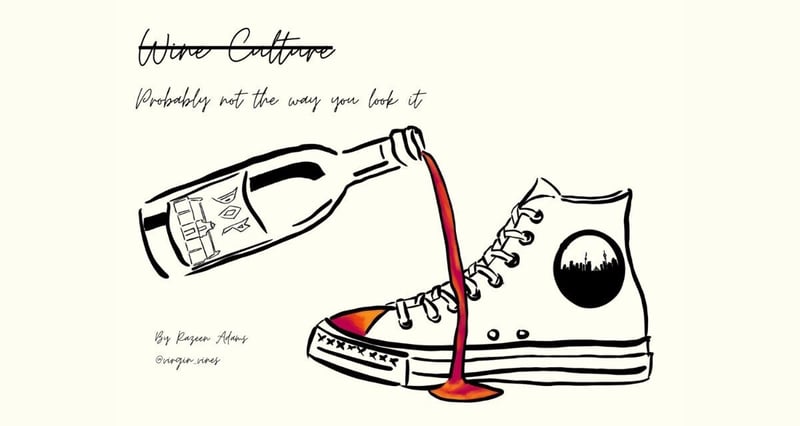
I have spent the last two years listening to winemakers, and wine brand owners wax lyrical about the rich culture of farming and winemaking that has been passed down from generation to generation in Western Cape. How wine has been intrenched in their upbringing and how they fly the flag of generational winemakers in the romantic story of vines and berries and incredibly old soil. I have used these stories as tools when selling, explaining and presenting wines, and they have been more than useful tools to say the least. But, it dawned on me that I couldn’t resonate with any of these stories as a coloured person working the wine industry in Johannesburg. You see, I didn’t grow up with wine as cultural inheritance. I would have had to travel incredibly far to see a vineyard, and no one, when I was growing up, was swirling their glasses to get hints of thatch and wet stone minimality. Because who wants to drink something that smells like the roof of a lapa and tastes of rocks?
The Converse All Star
This realisation came to me after I had treated myself to a naughty pair of black leather, high-top, Converse All Stars as a little birthday gift. I arrived home to find that the courier had delivered them, and unwrapping them from the box brought me way more joy than any bottle of wine ever could. In fact, I can’t think of anything that money has bought me, that make me feel as good as a fresh pair All Stars does. This got me to thinking: Why does a simple pair of sneakers make me feel this way? And why don’t I feel this way about wine, despite the fact that it is my career, my obsession, my drink of choice and something that I am pursuing academically too? The answer is culture.
The culture around the Converse All Star, at least in the community I grew up in is profound, it’s intricate, it has a sense of place, ownership traditions, preservation suggestions, fashion parings, and clout. The All Star is immune to buyers regret, it changes the way you walk, and the way you feel about yourself. In fact, the first person you’d see as a man with a fresh pair, would either be your girlfriend or your mother. To show off? No sir. You go to them so that they can paint the back label with clear nail polish to prevent it from fading. Is it that much different to how wine collectors and connoisseurs see wine? Do we not go to great lengths to preserve, store, pair and show off our wine purchases? Do wine collectors not buy into the history of the farms, the same way I buy into the lore about this sneaker? I’m not saying that old wine farms should change how they share their history, because it is important. I’m saying we need to develop a culture of drinking wine with the demographics that populate this country, that perhaps feel a little uneasy with the picture of a Cape Dutch farm house on the bottle.
Why wine culture is a foreign concept in the community I grew up in
You see I’ve been trying to get my peers (specifically people of colour) to drink more wine, and be interested in wine beyond the affects of the alcohol component. This has been incredibly difficult, as it’s difficult enough to get my friends (who aren’t in the food and beverage industry) to even try drinking craft beers. I mean the only reason we sometimes put the Carling Black Label and Amstels down to drink a Corona, is because Michelle Rodriguez made it looks so good in the Fast and the Furious movies. The truth of the matter is (I think) that we seldomly spend our money on things that aren’t entwined in our culture (referring to wine purchases that don’t result in binge drinking). Or at least, its difficult to sell us on a culture that is alien to us. Also the romanticisation of booze (because that’s how wine is often perceived), is an absurd concept to communities that assimilate alcohol consumption with bad behaviour and abuse.
The Dop System
This infamous truck system that’s origins can be traced back to the European settlers of the 17th century endured till 1960 where it was outlawed, and eventually banned in the 1990’s through the fall of Apartheid. A study conducted in the year 2000 [Schneider, Michelle; Norman, Rosana; Parry, Charles; Bradshaw, Debbie; Plüddemann, Andreas (May 2007)] on Fatal Alcohol Syndrome (FAS) in a Western Cape Community, shows that our “rich wine history” in the Western Cape, and the resulting drinking patterns developed either by the Dop System, or simply your proximity to a wine farm looking for cheap labour, produced an incredibly high rate of FAS amongst non-white labourers living in the “glamorous” wine country.
So how, as wine professionals, do we expect to grow interest in wine with people of colour when the history of the drink in this country is surrounded by things like the dop system, colonialism, and a vast majority of white farmers still living in Cape- Dutch farm houses? As a coloured person, I find it difficult to celebrate and romanticise the “long and rich history” of a wine farm that probably added to the oppressive history of this country by propagating things that have caused historical damage to our nation. That is not to say that these farms don’t make incredible wine, and that the current proprietors, winemakers and staff aren’t lovely human beings that have rolled blindingly far from the proverbial apple tree of historical and problematic ethics. But there are a finite amount of mouths to pour alcohol down in this country, and if the industry wants to grow its market share of wine drinkers, we have to create a culture of drinking wine that goes beyond history, and beyond the dangerous perception of how alcohol is consumed.
How do we create wine culture?
Well firstly, we need to un-demonise alcohol, and dare I say it; somethings can be learnt from the French here. Wine for them is a point of national pride. Children (of reasonable age according to their parents) are offered wine with their meals. In fact, up until 1956, schools were offering wine, albeit watered down, (couldn’t imagine diluting my Cotes Du Rhone) to students in their canteens. At this point they stopped indulging kids under the age of 14 with their daily tipple. But alcohol in schools was only completely banned in 1981.
Now, coming from South Africa, which is a far more conservative country than France, specifically when it comes to the dialogue around alcohol, it may seem a little absurd to offer children alcohol during their school day, or any time for that matter. But the fact of the matter is that in South Africa, alcohol is responsible for 12% of all adult deaths while in France that number is closer to 7%.
This discrepancy, I believe is down to how wine is viewed, treated and consumed in French society vs South African society. It seems that the fact that wine is seen as a part of the daily routine, often consumed in moderation with meals, helps to demystify wine to a younger audience of wine drinkers. There is no rebellion in enjoying wine, as it is part of your daily dining experience, so fewer occurrences of binge drinking and abuse occur. Whereas if you look at how wine (or alcohol, because unlike in France, they are grouped together in the same taboo category of consumables) is largely viewed in South Africa, as a vice and an intoxicant, all alcohol is consumed the same way: More often that not, in excess.
Now I’m not saying we should should give South African kids wine during their lunch breaks. Far from it actually. I’m saying that, much like how my Converse All Stars have cultural relevance and are something to be savoured and cherished and enjoyed in the community I grew up in, the French have cultivated a respect and a place for wine in their society that isn’t necessarily associated with abuse. Finding a way to engage young drinkers of colour in way that changes their perspective of how they view and consume wine, may be incredibly beneficial to the longevity of the wine industry, as well as positively impact the mortality rate associated with alcoholism in this country.
Pour conclure
Wine businesses, specifically black own business (BOBs) should be developing a discourse of what the cultural impact of wine looks like in the communities they come from. The cultural inheritance of generational wine makers, wine farm proprietors, and wine collections is unlikely to feature here. Acknowledging the abusive relationship associated with alcohol, as well as the difficult history of wine in general, might be the first step. Education (dare I say in something as simple as
food pairings, and making wine a part of a meal, instead of purely an intoxicant) within previously disadvantaged communities and schools can do nothing but help to ease the dangerous drinking habits seen in South Africa. Targeted demystification from winemakers, brand owners, and business people of colour, as well as developing healthy social and cultural practices around wine is definitely no mole hill; a mountain needs to be scaled. But it has to start somewhere, and I believe it starts with an educational effort from BOBs, emphasising responsible drinking habits, the global cultural relevance of wine, and forming the foundations for healthy wine culture in previously disadvantaged communities.
The cultural inheritance I will hand down is the joy I find in my career. It is about the bottle of wine I recommend positively impacting someone’s experience of a meal. It is about making wine relatable to my clients and shedding light about how its made, where it comes from and how it should be consumed. Wine professionals are all in this industry for different reasons, but I urge my colleagues of colour help build the culture. What brought you to wine? What is the cultural legacy you’d like to leave behind? How do we effectively build culture? Where do you think wine culture is going in your communities and friend groups? And how do we help this industry foster positive relationships with the beverage that forms such a large part of our lives?
Get new press articles by email
We submit and automate press releases distribution for a range of clients. Our platform brings in automation to 5 social media platforms with engaging hashtags. Our new platform The Pulse, allows premium PR Agencies to have access to our newsletter subscribers.
Latest from
- 7 Business Trends Your SME Can Leverage In 2026
- Sadilar Amplifies Visibility And Impact During Conference Season
- Future-ready Logistics- 5 Shifts TO Watch In 2026 (SUB-saharan Africa)
- Dunlop Urges Motorists To Prioritise Tyre Safety On The Busy Joburg To Cape Town Festive Route
- Poverty Trends Report Shows National Progress But Flags Growing Challenges In Gauteng
- SDG Challenge SA 2025 Highlights The Power Of Youth Innovation In Shaping A Sustainable Future
- Experienced Industry Leader Pauli Van Dyk Named Dean Of AFDA’s Upcoming Hatfield Campus
- South Africans Keep Tourism Alive As Homegrown Travel And Local Spending Rise
- Pretoria Student Wins Global Excel Esports Competition
- AfDB Steps Up Support For Somalia With $76m Investment In Roads And Regional Integration
- Corporate Law Experts Warn Directors Of Serious Consequences For Improper Transaction Approval
- New 3% Inflation Target Begins To Shift Expectations In South African Economy
- Retail As A Development Catalyst Drives New Africa Developments’ Inclusive Growth Strategy
- Collaborative SEF Model Shows How Civil Society And State Can Rebuild Economic Trust
- Shumani Accelerates Industrial Growth With Bheka Forklifts And New Equipment Plans For 2026
The Pulse Latest Articles
- Education Is The Frontline Of Inequality, Business Must Show Up (December 11, 2025)
- When The Purple Profile Pictures Fade, The Real Work Begins (December 11, 2025)
- Dear Santa, Please Skip The Socks This Year (December 10, 2025)
- Brandtech+ Has 100 Global Creative Roles For South African Talent (December 9, 2025)
- The Woman Behind Bertie: Michelle’s Journey To Cape Town’s Beloved Mobile Café (December 9, 2025)