
Forecourt Retail Emerges As Untapped Growth Engine Highlighting Rising Importance Of Convenience
Written by: BizCommunity Editor Save to Instapaper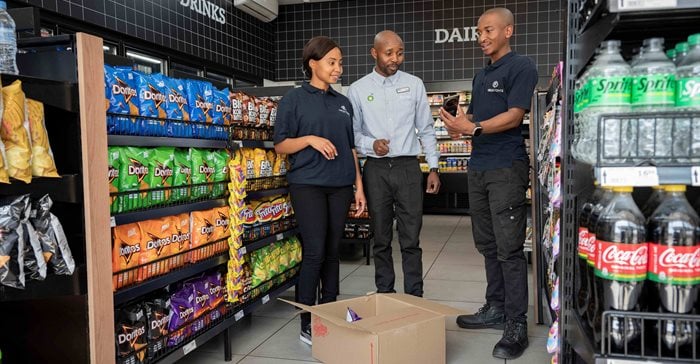
Ged Nooy, GM Field Force
Large supermarkets and informal traditional trade outlets (spazas, unbranded retail) continue to dominate the South African market in terms of sales contribution. Manufacturers are correctly prioritising the formal large grocery sector - including Spar, Shoprite Group, Pick n Pay and Woolworths - while concurrently working to unlock revenue from the informal trade.
Both of these focus areas are difficult, complex, and costly to execute.
However, there is a channel that has shown consistent year-on-year growth in both in-store sales value and volume – and a notable increase in footprint (14.5% between 2019 and 2023, adding 582 new forecourts during this time). According to the recent Trade Intelligence Forecourt Report, it is estimated that Forecourt Retail Convenience sales accounted for R33bn in sales. The report shows that 75% of surveyed consumers intend to maintain or increase their visit frequency to this channel, highlighting its growing relevance to shoppers and consumers.
This steady growth is being driven by changing shopper needs and missions. Shoppers increasingly seek safety, speed, and convenience – especially during commutes or late-night purchasing. In response, forecourt retailers are expanding their product assortments and offering grab-and-go options, branded coffee partnerships, and improved overall shopping experiences.
For manufacturers, implementation and execution of trade strategy within this channel can be less complex and more margin-rich, thanks to increased formalisation and streamlined retailer structures.
Forecourt retailers themselves are proactively driving footfall and retail sales to counter the broader decline in fuel spend. Retail sales in this channel grew by 4% (and by 8.5% in 2023), significantly outperforming total FMCG growth – even as fuel spend declined by -4%.
What’s driving growth?
Several strategies are contributing to the performance of forecourt retailers:
- New store openings and revamps aligned with shopper expectations
- Retail partnerships that build trust and expand assortment: Engen x Woolworths; BP x Pick n Pay Express; Astron x FreshStop
- QSR & Coffee partnerships with Seattle, Wild Bean Café, Vida e Caffè, Wimpy and others
- Loyalty programmes and banking/retail partnerships, merging fuel and grocery incentives for rewards and cashback
- Value-added services, such as courier collection (e.g. PUDO), car wash, play areas, workspaces, and seating
With sales growth, increasing points of distribution, evolving shopper missions, and strategies to drive greater foot traffic, forecourt convenience represents a high-value opportunity for FMCG manufacturers.
But are brands capitalising on it?
Unfortunately, in most cases, the answer is no.
Case study: Missed opportunity in must-stock line execution
To quantify the opportunity, Field Force collaborated with eRoute2Market to evaluate the numeric distribution and in-store performance of 110 Must-Stock Line (MSL) SKUs from two of South Africa’s largest grocery manufacturers, across 2,276 convenience stores. Based on these findings, extrapolating the data would clearly show that:
Key findings
- Neither manufacturer achieved over 50% numeric distribution across the combined MSL list.
- Despite price increases, both manufacturers recorded volume declines and growth below inflation.
- Had sales volumes remained flat (zero case growth), an additional R38.1 million in revenue could have been achieved due to more effective distribution.
MSLs refer to high-priority SKUs that must always be in stock to avoid lost sales opportunities.
This R38.1m is not just a number - it’s a clear reflection of what can be unlocked through sharper route-to-market focus, stronger retail partnerships, and disciplined in-store execution.
Why distribution still fails many manufacturers
Historically, categories with direct delivery models - such as carbonated soft drinks, tobacco, and energy drinks - have seen strong sales and share growth in this channel, led by experienced category captains.
However, most FMCG manufacturers do not have a direct delivery structure and rely heavily on distribution networks to execute sell-in and achieve in-store KPIs. The challenge? A finite pool of leading national distributors, many of whom operate syndicated portfolios across multiple principals. This often results in a focus on the overall basket rather than individual brand success - limiting the visibility, prioritisation, and promotional support each brand receives.
What should brand owners do?
To unlock the full value of forecourt retail, manufacturers must act decisively:
- Prioritise branded forecourt convenience channels such as BP, Engen, Astron, Shell, and Sasol – and ensure clear MSL focus.
- Win the war at the shelf – ensure MSLs are widely distributed, always on shelf, and consistently in stock.
- Use technology to diagnose execution gaps, and deploy people to close them: through roaming merchandising, real-time stock orders, and compliance audits to track performance.
For good measure
How can the retailers and manufacturers ensure that in-store KPIs are always in place? To quote Thomas Monson: “When performance gets measured, performance improves. When performance is measured and reported, the rate of improvement accelerates.”
Field Force findings from auditing up to 1 million data points daily show that by measuring and reporting performance, in-store KPIs improve by up to 20%. In our multifaceted market, measurement is imperative.
Field Force, your Route to Market Specialist, leverages sales-in convenience data, transparent real-time technology, and people to drive increased sales volume and share gains.
Get new press articles by email
We submit and automate press releases distribution for a range of clients. Our platform brings in automation to 5 social media platforms with engaging hashtags. Our new platform The Pulse, allows premium PR Agencies to have access to our newsletter subscribers.
Latest from
- 7 Business Trends Your SME Can Leverage In 2026
- Sadilar Amplifies Visibility And Impact During Conference Season
- Future-ready Logistics- 5 Shifts TO Watch In 2026 (SUB-saharan Africa)
- Dunlop Urges Motorists To Prioritise Tyre Safety On The Busy Joburg To Cape Town Festive Route
- Poverty Trends Report Shows National Progress But Flags Growing Challenges In Gauteng
- SDG Challenge SA 2025 Highlights The Power Of Youth Innovation In Shaping A Sustainable Future
- Experienced Industry Leader Pauli Van Dyk Named Dean Of AFDA’s Upcoming Hatfield Campus
- South Africans Keep Tourism Alive As Homegrown Travel And Local Spending Rise
- Pretoria Student Wins Global Excel Esports Competition
- AfDB Steps Up Support For Somalia With $76m Investment In Roads And Regional Integration
- Corporate Law Experts Warn Directors Of Serious Consequences For Improper Transaction Approval
- New 3% Inflation Target Begins To Shift Expectations In South African Economy
- Retail As A Development Catalyst Drives New Africa Developments’ Inclusive Growth Strategy
- Collaborative SEF Model Shows How Civil Society And State Can Rebuild Economic Trust
- Shumani Accelerates Industrial Growth With Bheka Forklifts And New Equipment Plans For 2026
The Pulse Latest Articles
- Education Is The Frontline Of Inequality, Business Must Show Up (December 11, 2025)
- When The Purple Profile Pictures Fade, The Real Work Begins (December 11, 2025)
- Dear Santa, Please Skip The Socks This Year (December 10, 2025)
- Brandtech+ Has 100 Global Creative Roles For South African Talent (December 9, 2025)
- The Woman Behind Bertie: Michelle’s Journey To Cape Town’s Beloved Mobile Café (December 9, 2025)