
South Africa’s Higher Education System Faces Transformation To Meet Skills And Access Gaps
Written by: BizCommunity Editor Save to Instapaper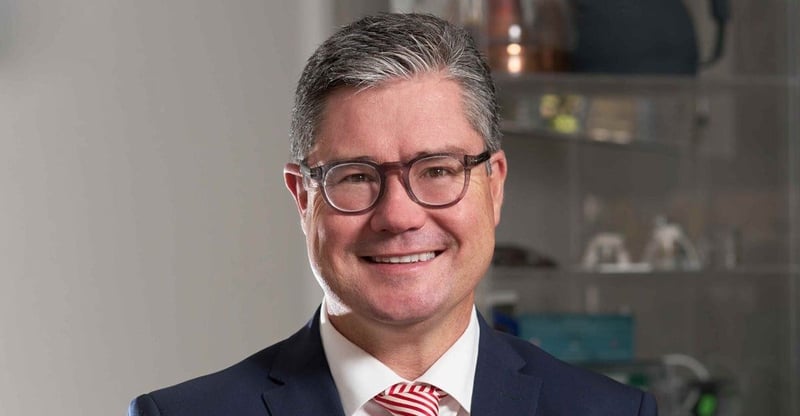
Dr Stan du Plessis, CEO at Stadio Higher Education
In South Africa, this shift is shaped by our particular context, where access to quality tertiary education remains limited, with demand outstripping supply.
Meeting this demand – and ensuring future graduates are equipped with relevant skills for the changing world of work – will require a system that can deliver quality and access at a scale never achieved before.
There are four mega trends that will shape employability, relevance and the future of higher education in South Africa:
- Flexibility: Students want learning that fits the rhythm of their lives. That means breaking from the traditional rigid academic calendars, allowing multiple entry points into qualifications, and offering learning pathways that can be accelerated or spaced out, depending on people’s needs.
It also means designing programmes in smaller, stackable components, supported by learning platforms that can adapt to individual interests and pace.
- Work-integrated learning: Employers are asking for graduates who are genuinely work-ready. The education sector needs to respond by bringing industry into the heart of curriculum design, assessment and even delivery, creating opportunities for students to learn in real workplaces rather than only in classrooms.
- Technology: Beyond teaching digital skills, universities and tertiary education institutions now need to cultivate algorithmic thinking, which is the mental model behind every digital tool; the mental discipline to conceptualise processes so that they can be automated with the appropriate technology, including AI.
Technology will also underpin personalisation in higher education, making it possible for students to experience a more tailored learning journey.
- Scale: South Africa’s demographic reality demands a system that can do much more with the resources it already has.
To expand access sustainably, the sector will need to rethink quality in higher education and understand it as a discussion about outputs, not a measure of inputs as has happened for hundreds of years.
This shift in understanding will allow the space for productivity growth to deliver high equality education at scale.
Employability and the future of South African higher education
These four trends are intertwined. Students, parents, higher education institutions and employers need to consider how they intersect, and how to harness them to address South Africa’s most urgent higher education challenges.
At the centre of the challenge is employability. A fundamental shift is underway: quality can no longer be judged by traditional measures, for example how selective a university is (if one thinks of the world’s elite institutions, such as Oxford or Harvard) or how many staff it employs compared to the number of students enrolled.
In the South African context, what matters is what students leave with – the skills they gain and their readiness for the world of work. We need to move beyond the traditional lens of “inputs”; the only meaningful measure of quality is output.
Ultimately we should care about who our students become. That includes the skills they graduate with, the relevance of the programmes they complete, and the extent to which they are prepared for the labour market.
This reflects a growing frustration among employers who feel many graduates arrive without the practical grounding to contribute meaningfully from day one. Addressing this requires a system designed around real-world readiness rather than academic tradition.
Work-integrated learning is therefore essential. Instead of treating industry as an external stakeholder, employers should be embedded throughout curriculum design, assessment and even delivery. For example, engineers learning in the workshops of companies to complement what they learn in lecture rooms, or law enforcement students being taught by experienced members of the police force.
The goal is not simply exposure but purposeful experience: students should perform aspects of academic learning in real workplaces, with industry helping to shape the standards that define competence.
This approach also challenges the long-standing perception that vocational programmes are somehow second-tier. In reality, these pathways often provide the most direct routes into employment. A rigid hierarchy of qualifications serves neither students nor the country.
The question of scale makes this even more pressing. South Africa shares the broader African reality: over the next decade, the continent will see hundreds of millions of young people reach tertiary education age.
It’s too late to imagine solving this by building enough traditional bricks and mortar institutions. We need to find ways of doing far more with the resources we already have. Flexibility and technology are not simply pedagogical improvements; they are central to making higher education accessible and sustainable at scale.
Productivity – the key lever
While South Africa’s higher education sector is comparatively well funded, it does not produce the volume of successful graduates required to shift the labour market or support economic growth.
Rethinking productivity does not mean cutting corners, but designing systems that allow more students to succeed. This should include multiple entry points, differentiated pacing, modular learning, and digital tools that can support personalised pathways at scale.
It also means taking affordability seriously. We can't have some elite conception that says higher education can be priced at a point where only the wealthiest in the country can afford it. The sector has a responsibility to ensure that cost is not prohibitive.
In order to address the needs of students in future, the sector also needs to begin to see them not as passive recipients of predefined programmes, but as individuals navigating complex lives, careers and ambitions while furthering their education as well.
The next decade will demand a sector willing to rethink deeply held assumptions and reimagine how learning happens.
The expectation that we will somehow deliver what is needed by doing the same thing we've always been doing is entirely implausible. We need to radically relook how we do higher education. That’s the only way to rise to this challenge.
Get new press articles by email
We submit and automate press releases distribution for a range of clients. Our platform brings in automation to 5 social media platforms with engaging hashtags. Our new platform The Pulse, allows premium PR Agencies to have access to our newsletter subscribers.
Latest from
- Boplaas Celebrates Top Honours In Winemag Ten Year Old Wine Report For Cape Vintage Reserve
- How ERP Systems Help SMEs Strengthen Financial Compliance And Operational Visibility
- Payflex Insights Reveal How Consumers Use BNPL While Managing Debt And Seasonal Spending
- Bridging The Gap Between Energy Project Ambition And Bankability Across Africa Power Sector
- DStv Schools Netball Challenge Expands Opportunities For Young Players Across South Africa
- Chevron Appoints Emmanuelle Garinet To Lead Exploration Across Americas And Sub Saharan Africa
- Shoprite Community Garden Competition Highlights Local Food Security Initiatives Across South Africa
- SADiLaR Workshop Showcases Digital Humanities Tools For African Language Research And Teaching
- Wesgro Trade Programme Links International Buyers With Western Cape Businesses
- Why Brand Impact And Strategic Creativity Matter More Than Campaign Views In Modern Marketing
- Sanitech Invites Mining Partners To Test South African Developed Waste Treatment Solution
- How The Five Hour Rule Helps Professionals Stay Competitive Through Continuous Learning
- Why Data Protection And Cybersecurity Are Essential To Building Consumer Trust In The Digital Economy
- African Energy Week 2026 To Convene Ministers And Industry Leaders In Cape Town
- Cyber Attacks Expose Growing Risks To Africa Healthcare Systems And Sensitive Patient Data
The Pulse Latest Articles
- Totalsports Two Oceans Marathon Powered By Byd (March 13, 2026)
- Byd Powered Car Of The Year Finalist Evaluation With Mobile Phev And Ev Charging (March 6, 2026)
- Strategy Is Easy. Execution Is Everything (March 5, 2026)
- The Paradox Of Leadership: Ntombizone Feni’s First Year As Ceo (March 4, 2026)
- Beyond The Pit: Why Mining Partnerships Are Being Redefined (March 2, 2026)