
Growthpoint’s Longkloof Studios Showcases Benefits Of Green Star Certification In Commercial Property
Written by: BizCommunity Editor Save to Instapaper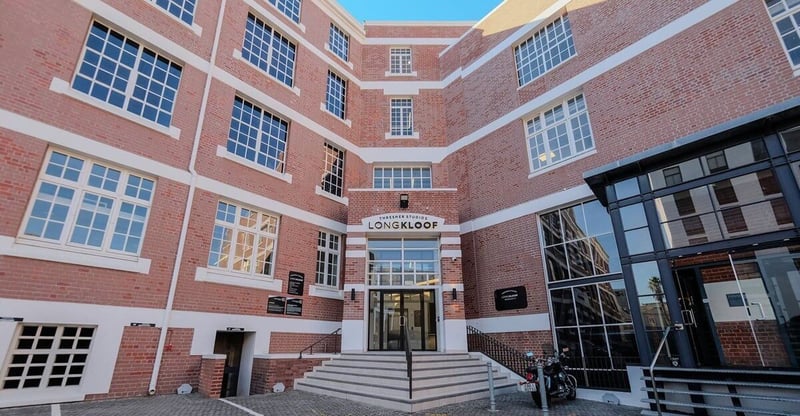
Source: Growthpoint Properties. Longkloof Studios is a green-certified commercial office space in Cape Town, having achieved a 4-Star Green Star Existing Building Performance rating.
By designing and building green and verifying it through independent certification to avoid ‘greenwashing’, the property sector can drive measurable climate action, reduce exposure to future risk, and unlock access to sustainable finance. Certification ensures that sustainability claims are based on consistent, transparent benchmarks. Not just box-ticking.
Certified green buildings have demonstrated better investment performance than non-certified ones, delivering higher returns, lower vacancy rates, and greater appeal to ESG-focused investors, according to the MSCI South Africa Green Annual Property Index (2023).
They are also typically resource efficient and have low utilities bills. In contrast, uncertified assets face rising operational costs, retrofit liabilities, and increasing risk of market devaluation.
“Property owners need to understand that certification isn’t the end goal. Instead, it’s a gateway to deeper, more effective sustainable building,” says Lisa Reynolds, chief executive officer of the Green Building Council South Africa (GBCSA).
“It’s how you prove that a building is actually performing in practice and on paper. Certification gives owners, investors, and tenants confidence that a building will deliver environmental and financial value over time.”
GBCSA provides independent and credible certification through internationally and locally recognised systems, including Green Star, Net Zero, and EDGE. To date, more than 1,200 projects have achieved certification.
Developed specifically for the South African context, Green Star is GBCSA’s flagship certification and serves as the industry’s trusted mark of excellence in the design, construction and operation of sustainable buildings.
Delivering better returns
The business case for green building certification is backed by hard data. According to the MSCI Index, green-certified office buildings consistently outperform their non-certified counterparts across key financial metrics.
Findings show that certified offices achieve a 1.5% higher annual return, 30% higher net operating income per square metre, and stronger tenant retention and rental stability over time.
These financial benefits are driven by lower utility costs, operational efficiency, and increased demand from tenants prioritising healthier, more sustainable workplaces. Certified buildings also hold stronger appeal in a competitive rental market – particularly among corporates with ESG mandates.
“The MSCI data proves that certified office buildings can be more profitable. Stakeholders such as investors and those in sustainable finance are paying attention and it’s becoming a clear competitive advantage,” says Georgina Smit, Head: Technical at GBCSA. “In South Africa, we are proud to have local data and research that backs up the business case for going green.
"The upside is only half the story. As expectations shift, uncertified buildings risk falling behind. Lisa Reynolds adds: “A growing trend in real estate is the ‘brown discount'.
"Tenants and investors are avoiding uncertified buildings and asking for discounts because they’re outdated and inefficient. If your building isn’t green, it’s at risk of losing value.”
A tool for green finance
Green buildings are inherently more adaptable and resilient to climate change, policy shifts, and economic shocks. During the Covid-19 pandemic, green-certified buildings retained tenants and value more effectively, thanks to lower operating costs and healthier environments. Today, these assets are also better positioned to cope with load shedding, water scarcity, and volatile utility prices.
At the same time, certification is becoming a prerequisite for access to sustainable finance such as green bonds, sustainability-linked loans, and preferential lending terms. A report by a global alliance of the world’s leading green-certification bodies, entitled Financing Transformation, highlights how third-party verified green buildings offer greater transparency, lower perceived risk, and are increasingly being prioritised by banks and institutional investors.
Reynolds says: “When looking at sustainable finance and ESG reporting, certification provides investors with a sense of confidence. It’s an independent, verifiable measure of a building’s sustainability performance.”
A call to action for investors
As South Africa advances its Just Energy Transition and scales up climate adaptation, green building certification is gaining importance across both the public and private sectors.
Government is the country’s largest property owner, so its ability to lead by example is significant. Reynolds says that public buildings should set the tone for private developers to follow: “If every building saved just 10% of its energy use, the national impact would be enormous.”
For developers, owners, and investors, green buildings with green building certification is the most effective way to future-proof assets, reduce risk, and demonstrate real ESG performance. Certification is a business imperative, not merely a ‘nice to have’. Without it, green building risks becoming just another marketing term.
Get new press articles by email
We submit and automate press releases distribution for a range of clients. Our platform brings in automation to 5 social media platforms with engaging hashtags. Our new platform The Pulse, allows premium PR Agencies to have access to our newsletter subscribers.
Latest from
- 7 Business Trends Your SME Can Leverage In 2026
- Sadilar Amplifies Visibility And Impact During Conference Season
- Future-ready Logistics- 5 Shifts TO Watch In 2026 (SUB-saharan Africa)
- Dunlop Urges Motorists To Prioritise Tyre Safety On The Busy Joburg To Cape Town Festive Route
- Poverty Trends Report Shows National Progress But Flags Growing Challenges In Gauteng
- SDG Challenge SA 2025 Highlights The Power Of Youth Innovation In Shaping A Sustainable Future
- Experienced Industry Leader Pauli Van Dyk Named Dean Of AFDA’s Upcoming Hatfield Campus
- South Africans Keep Tourism Alive As Homegrown Travel And Local Spending Rise
- Pretoria Student Wins Global Excel Esports Competition
- AfDB Steps Up Support For Somalia With $76m Investment In Roads And Regional Integration
- Corporate Law Experts Warn Directors Of Serious Consequences For Improper Transaction Approval
- New 3% Inflation Target Begins To Shift Expectations In South African Economy
- Retail As A Development Catalyst Drives New Africa Developments’ Inclusive Growth Strategy
- Collaborative SEF Model Shows How Civil Society And State Can Rebuild Economic Trust
- Shumani Accelerates Industrial Growth With Bheka Forklifts And New Equipment Plans For 2026
The Pulse Latest Articles
- Education Is The Frontline Of Inequality, Business Must Show Up (December 11, 2025)
- When The Purple Profile Pictures Fade, The Real Work Begins (December 11, 2025)
- Dear Santa, Please Skip The Socks This Year (December 10, 2025)
- Brandtech+ Has 100 Global Creative Roles For South African Talent (December 9, 2025)
- The Woman Behind Bertie: Michelle’s Journey To Cape Town’s Beloved Mobile Café (December 9, 2025)