
High-Volume DDoS Attacks Disrupt South African Hosting and Internet Infrastructure
Written by: BizCommunity Editor Save to Instapaper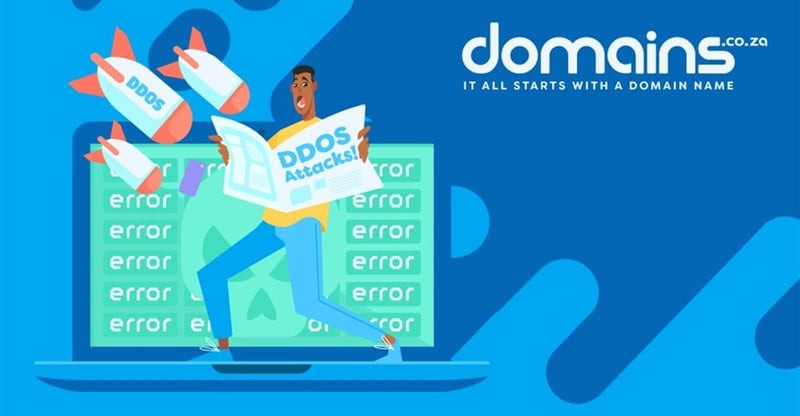
For a business, that can mean slow-loading pages, lost sales, missed emails, and customers who assume your website is unreliable.
This is not just a global enterprise problem. Recent high-volume DDoS attacks affected several South African hosting and internet infrastructure providers, causing connectivity problems and intermittent service issues. Some reported attacks reached hundreds of gigabits per second, showing how quickly harmful traffic can disrupt websites and online services at scale.
How A DDoS attack works
A DDoS attack usually uses a botnet, a network of infected computers, routers, servers, or IoT devices controlled by attackers without the owners' knowledge. They send large volumes of requests to the same target simultaneously. The target then runs out of capacity.
This can affect websites, servers, DNS services, and networks.
Some DDoS attacks are easy to spot because they involve huge traffic spikes. Others are harder to detect because the requests can resemble normal visitor activity.
Common methods include volumetric attacks, which consume bandwidth; application-layer attacks, which target specific website features; and DNS attacks, which affect how visitors reach your domain.
Why DDoS attacks are such a risk
A DDoS attack does not need to steal data to cause damage. Downtime alone can hurt your business.
If your website is unavailable, customers may not know you are under attack. They may simply think your business is offline, unstable, or unsafe. For e-commerce sites, that can mean lost revenue. For service businesses, it can mean missed leads. For portals or booking systems, it can block access to services people rely on.
DDoS attacks can also affect services tied to your domain, including email, customer platforms, payment systems, and third-party tools. If your DNS is disrupted, visitors may not reach your site even if the website server itself is still working.
There is also the issue of collateral damage. You may not be the direct target, but if your hosting, DNS, or upstream infrastructure is affected, your website can still experience problems.
How to help prevent DDoS attacks
You cannot always stop attackers from trying, but you can reduce the impact with layered protection.
Start with DDoS-protected DNS. DNS connects your domain name to your website. If DNS fails, visitors cannot reach you. Protected DNS helps absorb and filter harmful traffic before it causes disruption.
Next, use Anycast DNS. This routes DNS requests to the nearest available server location rather than relying on a single point. It helps improve speed, reliability, and availability during traffic spikes.
You should also monitor unusual traffic patterns, keep your website software updated, use bot filtering where possible, and protect your domain from unauthorised changes with domain locks and two-factor authentication (2FA).
How Domains.co.za helps protect your website
Domains.co.za’s Domain Protection helps secure your domain and improve website availability from one place. It includes DDoS and botnet protection, DDoS Protected DNS, Anycast DNS across 62 locations, WHOIS Privacy, Domain Transfer Lock, 2FA on domain updates, and DNSSEC support.
Together, these features help protect your domain from downtime, harmful traffic, unauthorised transfers, privacy exposure, and DNS-related attacks.
Conclusion
DDoS attacks are designed to make your website unavailable. They can affect sales, trust, email communications, customer access, and your overall online presence.
Domains.co.za helps reduce that risk with domain security, Anycast DNS, botnet protection, WHOIS Privacy, transfer locking, 2FA, and DNSSEC support, all designed to keep your domain secure, accessible, and easier to manage.
Get new press articles by email
We submit and automate press releases distribution for a range of clients. Our platform brings in automation to 5 social media platforms with engaging hashtags. Our new platform The Pulse, allows premium PR Agencies to have access to our newsletter subscribers.
Latest from
- Direct Marketers Must Register With NCC Opt-Out Registry And Cleanse Databases Monthly
- API Awards Mark 10th Edition With New Performance And Legacy Category
- SAFLA Joins SARS Stakeholder Forums To Strengthen Customs Engagement
- AI Detectors Lose Edge as Models Mimic Human Style, Says Dr Mario Landman
- Meetlo Studio Designers Highlighted by Maison&Objet Pulse and Decorex Africa Rising Talent Awards
- Addressing 40.6% Youth Unemployment by Expanding Creative Industry Access
- Study Finds Over 2,000 High Impact Vulnerabilities in Publicly Deployed AI Generated Applications
- Global Air Passenger Demand Falls 2.2% in May While Load Factor Hits Record 83.5%
- Miway CEO Highlights Low Overturn Ratio As Measure Of Fair Customer Outcomes
- Laila Bastati Argues CEOs Do Not Cite 3% Share of Voice Declines for Revenue Shortfalls
- Namibia Positioned As Promising Frontier Oil And Gas Market Ahead Of 2030 Production
- Northlink College Team Showcases Programmes at Cape Town Business Summit & Expo
- Diakité to Outline Simandou 2040 Investment and Reform Plans at AMW 2026
- NWU Vice Chancellor Condemns Large Scale Violence Against Immigrants While Acknowledging Immigration Challenge
- Retailers Must Drive Youth Employment and Skills Development Says Spar Group Chief People Officer
The Pulse Latest Articles
- Tutor Doctor South Africa Celebrates Double Award Wins (June 30, 2026)
- Rethinking Performance: Part 5 Aligning Judgement In Performance Evaluation (June 30, 2026)
- Axor: Redefining The Architecture Of Luxury Living (June 29, 2026)
- The Real Ai: How African Ingenuity Drives Growth And Distinguishes The Continent’s Logistics Sector (June 25, 2026)
- Sotru Launches To Stop Supplier Fraud At The Moment Of Payment (June 23, 2026)