
Oceanx Shows How Ai Is Transforming Marine Research
Written by: BizCommunity Editor Save to Instapaper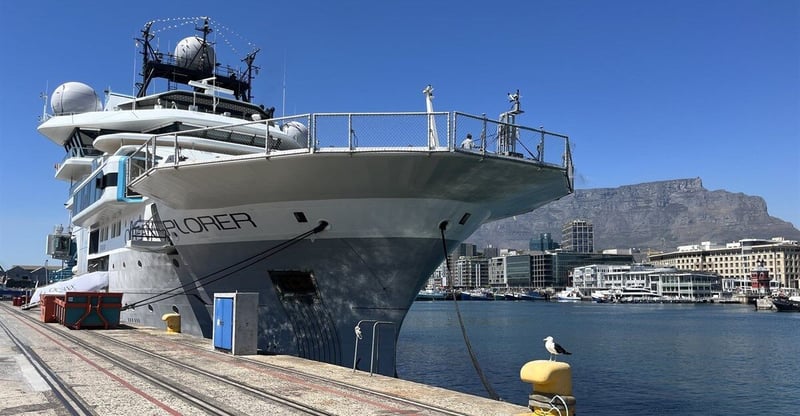
The OceanXplorer is docked in Cape Town until the end of the week.
Before deploying any assets into the deep, the OceanX team employs a systematic approach that begins with acoustic mapping – using sound waves to create detailed images of previously unexplored underwater environments.
This initial step allows researchers to build a comprehensive picture of marine ecosystems before sending out expensive equipment.
"This is how we go to an area that no one has ever seen before and put a picture of the ecosystem together layer by layer just by using sound," Rodrigue explained.
This practical application of technology optimises research efficiency and ensures operational safety in unknown territories.
Actually useful AI
The most significant AI implementation comes in the form of real-time species identification.
OceanX team has trained specialised AI models to automatically classify marine life from live video feeds captured by remotely operated vehicles (ROVs).
Mattie Rodrigue (right) guided a media tour of OceanXplorer
While the initial training requires high-resolution footage and new cameras, the resulting AI systems can independently identify species during dives, dramatically streamlining data collection processes that previously required extensive manual review.
From a business perspective, the AI integration delivers substantial returns on investment.
The molecular research conducted in the vessel's advanced sequencing facility in the dry lab uses environmental DNA (eDNA) analysis – extracting genetic material from water, sediment, and air samples to identify species present in an area without direct observation.
"One of the tools that we're developing is called environmental DNA or eDNA," explained Rodrigue.
This approach allows for "faster, cheaper, and more efficient data collection," addressing crucial questions about marine biodiversity while optimising resource allocation.
Giving back to the science community
OceanX is expanding its AI programme to create a sustainable business model for continued research.
"We're working on a larger scale AI programme that will be what we leave behind in every country or region that we visit," Rodrigue stated.
This initiative will enable local scientists to maintain monitoring efforts and contribute to global databases after the OceanXplorer departs, creating an expanding network of data collection points.
Genome sequencing happens on Oxford Nanopore Technologies PromethION and GridION equipment.
Rather than keeping their findings proprietary, OceanX has adopted an open science approach.
All collected data – from genetic sequences to seabed mapping – is contributed to publicly available repositories, including platforms hosted by the UN Decade of Ocean Science and global initiatives like Seabed 2030.
This strategy positions OceanX as a leader in the field while encouraging collaborative innovation.
Future business applications
The OceanX model demonstrates how AI can be leveraged to create scalable, efficient research operations with global impact.
By combining advanced technology with strategic partnerships and open-data policies, they've created a framework that other organisations can adapt for marine conservation, resource management, and sustainable blue economy initiatives.
This approach offers valuable lessons in balancing innovation with practical application and collaborative growth – proving that even in the most challenging environments, artificial intelligence can deliver measurable results while advancing broader scientific and conservation goals.
Get new press articles by email
We submit and automate press releases distribution for a range of clients. Our platform brings in automation to 5 social media platforms with engaging hashtags. Our new platform The Pulse, allows premium PR Agencies to have access to our newsletter subscribers.
Latest from
- 7 Business Trends Your SME Can Leverage In 2026
- Sadilar Amplifies Visibility And Impact During Conference Season
- Future-ready Logistics- 5 Shifts TO Watch In 2026 (SUB-saharan Africa)
- Dunlop Urges Motorists To Prioritise Tyre Safety On The Busy Joburg To Cape Town Festive Route
- Poverty Trends Report Shows National Progress But Flags Growing Challenges In Gauteng
- SDG Challenge SA 2025 Highlights The Power Of Youth Innovation In Shaping A Sustainable Future
- Experienced Industry Leader Pauli Van Dyk Named Dean Of AFDA’s Upcoming Hatfield Campus
- South Africans Keep Tourism Alive As Homegrown Travel And Local Spending Rise
- Pretoria Student Wins Global Excel Esports Competition
- AfDB Steps Up Support For Somalia With $76m Investment In Roads And Regional Integration
- Corporate Law Experts Warn Directors Of Serious Consequences For Improper Transaction Approval
- New 3% Inflation Target Begins To Shift Expectations In South African Economy
- Retail As A Development Catalyst Drives New Africa Developments’ Inclusive Growth Strategy
- Collaborative SEF Model Shows How Civil Society And State Can Rebuild Economic Trust
- Shumani Accelerates Industrial Growth With Bheka Forklifts And New Equipment Plans For 2026
The Pulse Latest Articles
- Education Is The Frontline Of Inequality, Business Must Show Up (December 11, 2025)
- When The Purple Profile Pictures Fade, The Real Work Begins (December 11, 2025)
- Dear Santa, Please Skip The Socks This Year (December 10, 2025)
- Brandtech+ Has 100 Global Creative Roles For South African Talent (December 9, 2025)
- The Woman Behind Bertie: Michelle’s Journey To Cape Town’s Beloved Mobile Café (December 9, 2025)