
Global Fuel Prices Rise As Supply Disruptions Highlight Vulnerability Of Import Dependent Nations
Written by: BizCommunity Editor Save to Instapaper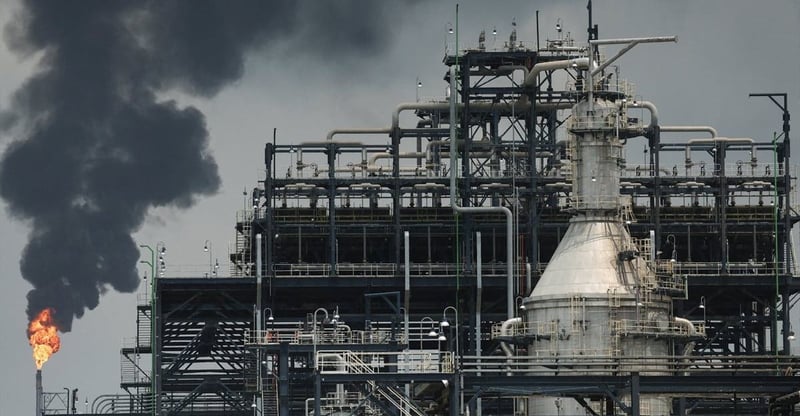
A flame rises from a gas flare at the Dangote Industries oil refinery and fertiliser plant site in the Ibeju Lekki district of Lagos, Nigeria. Image credit: Reuters/Sodiq Adelakun/File Photo
Conflict in West Asia has caused disruptions to supply and a steep increase in fuel prices.
“To maintain product availability in our country, as communicated last week, the department remains in constant engagement with industry players to explore all possible supply sources.
“These engagements are aimed at ensuring uninterrupted fuel availability in the domestic market, without immediately utilising the country’s strategic reserves,” he said.
Hurdles
The minister noted that disruptions are particularly impactful on countries that are reliant on oil imports.
“While questions remain about potential fuel supply disruptions, the reality is that substantial fuel price increases are increasingly unavoidable.
"Countries that rely heavily on imports of refined petroleum products remain particularly vulnerable to global market shocks.
“(The) sustainable long-term solution to our challenges lies in domestic production. This can only be achieved through the rigorous exploration and responsible exploitation of our own petroleum resources,” Mantashe stated.
South Africa’s potential oil production has been met with legal challenges from environmental groups.
“It is now well established that South Africa is endowed with significant offshore petroleum potential, including major gas discoveries in the Outeniqua Basin.
“The Orange Basin has also emerged as a world-class frontier, following significant oil discoveries in Namibia, which geological evidence suggests may extend southwards into South African waters.
“Regrettably, we have not yet been able to fully explore and exploit this potential due to ongoing blockages against oil and gas development in the name of environmental protection,” the minister said.
Mantashe stated that exploration is in line with the Constitution, which states that “we must secure ecologically sustainable development and the use of natural resources while promoting justifiable economic and social development”.
“The truth is that rising oil and gas prices have a direct ripple effect on the cost of living. The lack of access to these resources has an even greater impact, as it can lead to energy poverty, rising unemployment, and the further entrenchment of poverty and inequality.
“South Africa, and indeed the African continent at large, cannot afford to remain poor while endowed with abundant natural resources. We must harness these resources responsibly to drive inclusive economic grow(th), create employment opportunities, and eradicate poverty,” he said.
Lifting the gas moratorium
Mantashe emphasised that the “importance of responsible oil and gas development in meeting our socioeconomic needs cannot be overstated”, arguing that the development would significantly enhance South Africa’s “industrialisation efforts and contribute to GDP growth”.
“It is against this backdrop that our government continues to reform its legislative framework to promote and advance the petroleum sector so that it can make a meaningful contribution to South Africa’s economy.
“The enactment of the Upstream Petroleum Resources Development Act (UPRDA) represents a critical intervention in this regard. The act has not only separated petroleum from mining legislation, but also establishes an enabling regulatory framework aimed at accelerating exploration and production of the nation’s petroleum resources,” he explained.
Extensive submissions from industry role players have been taken into account with an eye on publishing the regulations for implementation by the end of March.
“We are also advancing the modernisation of the Petroleum Products Act. Following public consultations on the draft Petroleum Products Bill (PPB), the bill is currently undergoing certification processes ahead of submission to Cabinet for approval, and thereafter to Parliament.
“These reforms are aimed at ensuring equitable access to, and sustainable development of the nation’s petroleum resources while, in the long term, reducing the country’s reliance on imports of finished products to meet domestic demand,” Mantashe said.
Furthermore, an engagement with the ministers of Environmental Affairs and Water and Sanitation has been held to finalise and gazette regulations for shale gas development.
“As per our previous commitment, the department stands ready to lift the moratorium (on shale gas development) immediately after these regulations are promulgated.
“This commitment represents an important step towards promoting fairness and regulatory certainty in the development of our oil and gas sector and ensures that these matters do not remain indefinitely suspended in lengthy litigation processes that create investor uncertainty,” he said.
The minister assured that the government is committed to ensuring that the country’s petroleum potential is developed responsibly.
“(We) remain firmly committed to ensuring that South Africa’s petroleum resources are developed in an orderly, responsible, and environmentally sustainable manner, while at the same time advancing meaningful social and economic development for our people.
“South Africa must not stand on the sidelines while the global energy landscape evolves and while our neighbouring countries unlock the value of their resources.
“We must act decisively, responsibly, and in the national interest to unlock the full potential of our petroleum sector,” Mantashe concluded.
Get new press articles by email
We submit and automate press releases distribution for a range of clients. Our platform brings in automation to 5 social media platforms with engaging hashtags. Our new platform The Pulse, allows premium PR Agencies to have access to our newsletter subscribers.
Latest from
- Motoring Mavericks Campaign Showcases Career Opportunities For Young Professionals In Dealerships
- Can Johannesburg Reverse Urban Decline As City Pushes CBD Renewal And Investment Strategy
- HostAfrica Launches South Africa’s First Locally Hosted NVIDIA RTX PRO GPU Infrastructure
- Experts Highlight SME Digitalisation As Key To Economic Growth And Inclusion Across Africa
- Experts Call For Bold Action To Strengthen South Africa Digital Economy And Global Standing
- Alfort Petroleum Joins Angola Oil And Gas Conference As Gold Sponsor Ahead Of Drilling Plans
- UK And Deutsche Bank Partnership Targets Africa Trade Finance Gap With New Risk Sharing Programme
- Cross Border Hiring Raises Compliance Challenges As Businesses Strengthen Due Diligence Measures
- Juta Launches Property Practice Platform To Modernise Compliance And Transaction Management
- Global Fashion Event Highlights Surge Of Emerging Designers Alongside Established Fashion Houses
- Brave Group Strengthens Leadership Team To Drive Growth At Intersection Of Technology And Creativity
- Mozambique Oil And Gas Sector Withdraws From London Summit Over Discrimination Concerns
- CCBA Launches Ascend Programme To Develop Africa’s Next Generation Of Business Leaders
- Mining Sector Faces Rising Pressure As Water Management And Compliance Take Centre Stage
- TARDI Graduates Strengthen Animal Health Services To Protect Food Security And Rural Livelihoods
The Pulse Latest Articles
- Steinmüller Africa Opens Registration For 2026 Boiler Technology Course (March 17, 2026)
- Smart Mobility, Smarter Growth: Reimagining African Supply Chains For A Digital Decade (March 17, 2026)
- Press Release: Introducing Glow Mists By Gloot (March 16, 2026)
- Coaching: The Hidden Engine Of Engagement (March 16, 2026)
- Totalsports Two Oceans Marathon Powered By Byd (March 13, 2026)