
Zahra Ally Explains Journey From Childhood Debates to Studying Law
Written by: BizCommunity Editor Save to Instapaper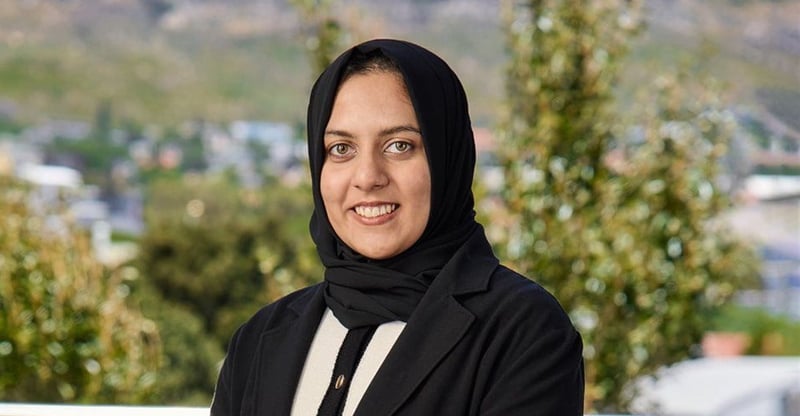
Zahra Ally, candidate attorney at Herold Gie Attorneys
“As a child, my father often told me that I argue like a lawyer, although I could never picture myself being one. Later, I grew interested in the language and interpretation of the law.
“I started to notice how the law regulates every facet of society. I began to see the LLB as an incredibly practical and empowering degree. Most importantly, I saw it as an opportunity to help people.”
Nevertheless, her decision to take her place at UCT was not an easy one.
“Overnight, and only due to significant financial sacrifice from my parents, I moved from a small town to an unfamiliar city where I knew nobody,” Ally explains. “Of course I questioned whether I had made the right decision.”
However, witnessing the passion her Constitutional Law lecturer had for law and social justice helped reaffirm she was on the right path: “I remember glimpsing at the hope and possibility which she sees in our law and our ability to shape it. It was at that moment that I knew that I was where I was meant to be.”
Now a candidate attorney at Herold Gie, Ally talks to us about the meaning of Youth Day, the struggles affecting today’s young people, and the critical skills missing from today's law schools...
As we commemorate the 50 year anniversary of Soweto Uprising, what is the significance of Youth Day to you, as a young attorney?
Youth Day is extremely important to me.
I am part of a generation that has inherited the rights in the Bill of Rights. It is easy to take these rights for granted. However, without the struggles and sacrifice of the youth 50 years ago, I would not have had the luxury of choosing to study law, and I most certainly would not have been able to enter the legal profession.
Youth Day also serves as a reminder of the challenges still being faced and barriers which we have yet to dismantle.
In 1976, the youth were forced to take to the streets to fight for systemic change. Have our methods for demanding change truly evolved, or are young people today still facing the same barriers to being heard?
The right to lawfully protest is now constitutionally protected. However, we now also have the hard-won right to vote.
Voting is undeniably the single best way in which young people can make their voices heard. However, approximately 70% of 18 and 19-year-olds have not registered for the upcoming local government elections. There seems to be a lack of political participation and a sense of hopelessness among the youth.
In my hometown, communities frequently go days or even weeks without running water and electricity. Unfortunately, they are often left with no choice but to protest, as this is the only way in which their frustrations are heard.
While some barriers to being heard have been lifted, South Africa remains one of the most unequal societies in the world, and as such, many of those barriers sadly remain.
Looking at the current socioeconomic landscape, what do you think is the defining "struggle" for youth, and how can the legal sector help address it?
This year’s Youth Day Presidential Address focused on youth unemployment.
Young people today are faced with highly saturated job markets and salaries that cannot keep up with the astronomical costs of living. Many children go to school on an empty stomach and complete their homework by candlelight.
The more privileged among us have to deal with algorithms more addictive than casinos, the adverse impacts of social media on mental health, and the loneliness epidemic of the 21st century. And of course, we are having to reckon with the threat of AI replacing entry-level positions.
The unemployment issue needs to be addressed from the ground up. The matric pass rate in 2025 reached a record-breaking 88%. However, this is not quite a victory when the standard of education is plummeting, and in fact, does a disservice to the right to education for which the youth fought so hard.
Of course, the legal sector can help by investing in programmes which educate young people about their rights and responsibilities. However, I think that it is more pressing for the legal sector to challenge the dwindling quality of the school curricula at the basic education level, as well as the lowering of the pass requirement to 30%.
What do you feel is the most important piece of legislation impacting young people that has been passed in the last 50 years?
When it comes to legislation impacting young people, the Constitution is undeniably the lynchpin. It gives children unqualified socioeconomic rights such as the right to healthcare and housing.
It also paved the way for more specific legislation such as the South African Schools Act of 1996, the Children’s Act of 2005, and the Child Justice Act of 2008, to name a few.
What is one legal skill you believe will be absolutely critical for the next generation of attorneys that isn't currently being taught in law school?
Many law schools equip students with sound theoretical knowledge, but very few have a compulsory practical component.
Consequently, many students emerge from law school without knowing what pleadings look like and how court proceedings are conducted. Perhaps most importantly, without practical experience, many students do not know how to interact with clients and do not develop essential interpersonal skills.
Additionally, I also think that a greater emphasis needs to be placed on dispute resolution, as it is becoming increasingly important in the legal field.
Share one piece of advice you’d give your younger self...
Be kind to others, believe in yourself, and tell your loved ones that you love them every single day.
Get new press articles by email
We submit and automate press releases distribution for a range of clients. Our platform brings in automation to 5 social media platforms with engaging hashtags. Our new platform The Pulse, allows premium PR Agencies to have access to our newsletter subscribers.
Latest from
- Skills Gap Hinders South African Organisations Despite Steady ICT Graduate Supply
- South Africa Harvests 27% Of Record 17.3 Million Tonnes Maize Amid Delayed Season
- Chery To Begin Local Manufacturing At Former Nissan Rosslyn Plant For Selected SUVs
- R1bn Initial Payment and R270m Deferred Consideration Form Cornerstone of MRL Business Rescue
- Nolands Advises on 18% Individual and 22.4% Company CGT Risk as Base Cost Drops to Zero
- Inscape Education Group Acquires Villioti Fashion Institute To Strengthen Creative Education Pathways
- Naspers Reports Ecosystem Adjusted EBITDA Of $1.3bn And Record Free Cash Flow Of $1.5bn
- CEM Africa 2026 Explores Trust Technology and the Human Future of CX
- I Love Coffee Converts 25% Gross Profit into Job Creation While Employing 60% Deaf Staff
- Qrent Says Circular IT Becomes Commercial Strategy for Cost, ESG and Resilience
- Zuko Tisani Reaches 7,000 Metres in Everest Bid to Raise Funds for Youth Development
- VML Promotes Nhlanhla Ngcobo And Theo Ferreira To Group Executive Creative Directors
- Court Considers Child’s Best Interests When Determining Parental Contact Rights
- Takealot Group Reports First Year of aEBIT Profitability With $11m Result
- Nigeria Appointed First Chair Of AMSG Ministerial Steering Committee Ahead Of African Mining Week 2026
The Pulse Latest Articles
- Axor: Redefining The Architecture Of Luxury Living (June 29, 2026)
- The Real Ai: How African Ingenuity Drives Growth And Distinguishes The Continent’s Logistics Sector (June 25, 2026)
- Sotru Launches To Stop Supplier Fraud At The Moment Of Payment (June 23, 2026)
- The Death Of The Dinner Party? Why South Africans Are Choosing Convenience Over Traditional Entertaining (June 23, 2026)
- Wildbeest Media Launches 2026 Tourism Marketing Campaign Service For South African Travel Brands (June 22, 2026)