
Court Orders Lesotho Dams Authority To Compensate 600 Villagers After Long-Running Katse Dam Dispute
Written by: BizCommunity Editor Save to Instapaper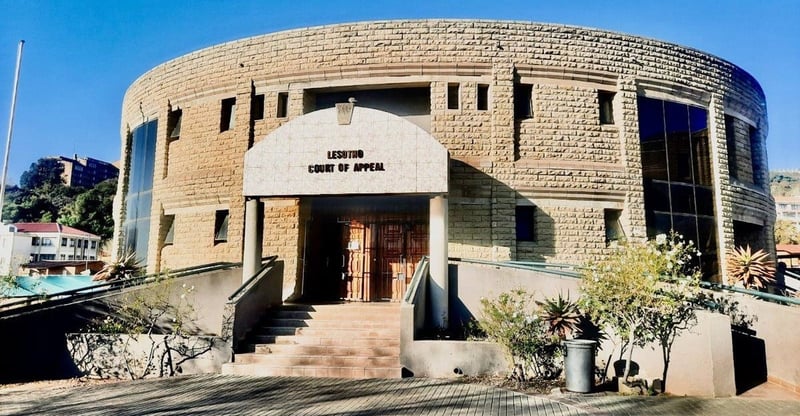
The Court of Appeal has dismissed the Lesotho Highlands Development Authority’s challenge to paying compensation to the Bobete community in Thaba-Tseka. Photo: Sechaba Mokhethi / GroundUp
- The Court of Appeal has ordered the Lesotho Highlands Development Authority to pay compensation owed since 2013 to more than 600 villagers in Bobete whose livelihoods were disrupted by construction of the Katse Dam.
- The court ruled that the authority cannot use internal policies and consultants reports to override its constitutional duty to compensate communities, and condemned its failure to consult villagers before unilaterally stopping payment in 2013.
- The authority has 90 days to pay.
The Lesotho Highlands Development Authority (LHDA) has lost its fight to avoid paying long-overdue compensation to the Bobete community in Thaba-Tseka.
On 7 November, the Court of Appeal dismissed LHDA’s challenge and upheld a High Court order compelling it to pay.
The ruling forces the LHDA to release a “second and final tranche” of compensation, owed since 2013 to the U Khopo Maliba-Matšo Society, which means “You are cruel, Maliba-Matšo river”. The river is the waterway to the dam.
The group of more than 600 villagers had their livelihoods disrupted by the construction of the Katse Dam under the Lesotho Highlands Water Project (LHWP).
Chief Justice Sakoane ruled that the LHDA cannot rely on internal policies or technical reports to override its constitutional and statutory duty to compensate communities affected by dam construction and diminished river flows. That obligation, the court held, arises from the Constitution, the LHWP Treaty, and the LHDA Order, and is not a matter of bureaucratic discretion.
A legal duty, not a policy choice
Villagers in Bobete lost access to vital communal resources that include riverine ecosystems, firewood, fish, wild vegetable and medicinal plants, and grazing land after the construction of the Katse and Mohale dams.
The LHDA paid a first tranche of compensation for “presumed losses” in 2003/4. Its own policy required a second tranche after a ten-year review in 2013.
But the LHDA unilaterally stopped the 2013 payment, citing a consultant’s monitoring report that claimed there was “no evidence” of compensable losses.
The court found this defence unlawful and fundamentally misguided since a policy cannot replace constitutional rights.
Justice Sakoane anchored the judgment in three binding legal obligations: the Constitution’s requirement for full and prompt compensation when people’s property or livelihoods are affected; the LHWP Treaty’s guarantee that communities must not see their living standards fall below pre-project levels; and the LHDA’s statutory duty to compensate and assist all people displaced or harmed by the project.
Unilateral decisions
A central flaw was LHDA’s failure to consult the community. The consultant’s report revealed that no village meeting took place in Bobete, because the community had not been properly notified.
“Its [LHDA] decision to discontinue compensation without meaningful engagement of the affected communities was, therefore, not only procedurally unfair but also substantively unlawful,” said Court of Appeal Judge President Kananelo Mosito.
The court condemned LHDA’s “elitist and unilateralist” approach. Chief Justice Sakoane said fairness demanded that the villagers should have been heard and given the opportunity, perhaps with expert assistance, to challenge the high-level technical reports that formed the basis for denying them compensation.
The LHDA also failed to fulfil the statutory requirements of the LHDA Order, which obliges it to submit compensation-related proposals to the minister for approval. The court found no evidence that the decision to stop compensation was ever put to the minister for approval. The Bobete community was not even informed of LHDA’s decision to discontinue payment; they discovered it only through court papers when the LHDA submitted its answering affidavits.
“Compensation delayed is compensation denied”
The court found that compensation due in 2013 was still outstanding over a decade later, violating the Constitution’s requirement of prompt payment. President Mosito noted that a decade-late payment is, “in practical terms, compensation denied”.
The court emphasised that this delay inevitably impacted the standard of living of the society’s members, contrary to the foundational principle of the LHWP Treaty and Act that compensation should maintain pre-project living standards.
The appeal was dismissed with costs, upholding the high court order.
LHDA now has 90 days to pay the Bobete community what they have been owed for more than a decade. The amount to be paid is yet to be known.
This article was originally published on GroundUp.
© 2025 GroundUp. This article is licensed under a Creative Commons Attribution-NoDerivatives 4.0 International License.
Get new press articles by email
We submit and automate press releases distribution for a range of clients. Our platform brings in automation to 5 social media platforms with engaging hashtags. Our new platform The Pulse, allows premium PR Agencies to have access to our newsletter subscribers.
Latest from
- 7 Business Trends Your SME Can Leverage In 2026
- Sadilar Amplifies Visibility And Impact During Conference Season
- Future-ready Logistics- 5 Shifts TO Watch In 2026 (SUB-saharan Africa)
- Dunlop Urges Motorists To Prioritise Tyre Safety On The Busy Joburg To Cape Town Festive Route
- Poverty Trends Report Shows National Progress But Flags Growing Challenges In Gauteng
- SDG Challenge SA 2025 Highlights The Power Of Youth Innovation In Shaping A Sustainable Future
- Experienced Industry Leader Pauli Van Dyk Named Dean Of AFDA’s Upcoming Hatfield Campus
- South Africans Keep Tourism Alive As Homegrown Travel And Local Spending Rise
- Pretoria Student Wins Global Excel Esports Competition
- AfDB Steps Up Support For Somalia With $76m Investment In Roads And Regional Integration
- Corporate Law Experts Warn Directors Of Serious Consequences For Improper Transaction Approval
- New 3% Inflation Target Begins To Shift Expectations In South African Economy
- Retail As A Development Catalyst Drives New Africa Developments’ Inclusive Growth Strategy
- Collaborative SEF Model Shows How Civil Society And State Can Rebuild Economic Trust
- Shumani Accelerates Industrial Growth With Bheka Forklifts And New Equipment Plans For 2026
The Pulse Latest Articles
- Education Is The Frontline Of Inequality, Business Must Show Up (December 11, 2025)
- When The Purple Profile Pictures Fade, The Real Work Begins (December 11, 2025)
- Dear Santa, Please Skip The Socks This Year (December 10, 2025)
- Brandtech+ Has 100 Global Creative Roles For South African Talent (December 9, 2025)
- The Woman Behind Bertie: Michelle’s Journey To Cape Town’s Beloved Mobile Café (December 9, 2025)