
World Metrology Day webinar examines the role of measurement in public trust and policymaking
Written by: National Metrology Institute of South Africa Save to Instapaper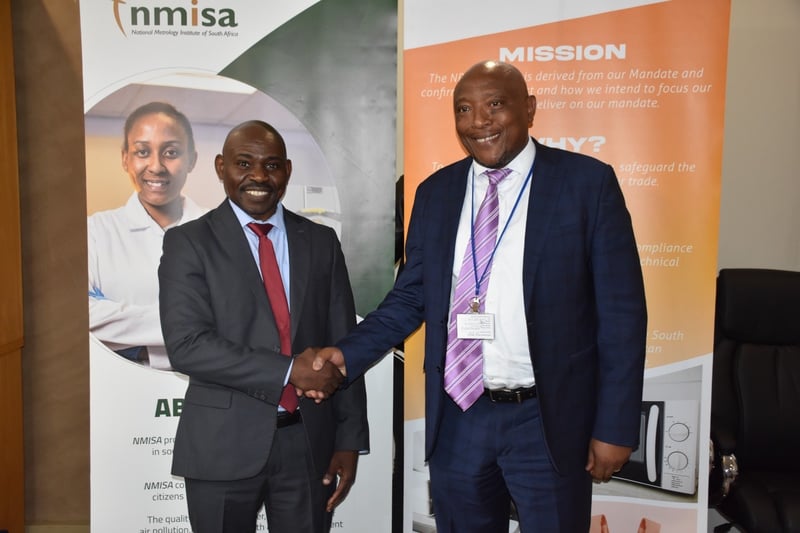
Every day, people rely on measurements they rarely think about, from the accuracy of electricity bills and food labelling to the data informing environmental monitoring and public policy decisions.
At this year’s World Metrology Day webinar, speakers explored the often invisible systems that make that trust possible.
The 2026 webinar, hosted by the National Metrology Institute of South Africa (NMISA) and the National Regulator for Compulsory Specifications (NRCS), brought together policymakers, scientists, regulators, industry leaders, and technical experts to discuss the theme “Metrology: Building Trust in Policy Making”.
Although metrology is usually linked to laboratories and technical standards, the event’s discussions kept coming back to a more human concern: confidence in the measurement results fundamental to systems people rely on every day.
With governments and institutions facing more scrutiny about transparency, accountability, and evidence-based decisions, speakers stressed that reliable measurement is the foundation for credible policy.
Building Trust Through South Africa’s Quality Infrastructure
The meeting was officially opened by Dr Anneline Chetty, representing the Department of Trade, Industry and Competition (the dtic), which oversees both the National Metrology Institute of South Africa (NMISA) and the National Regulator for Compulsory Specifications (NRCS).
Dr Chetty provided background into the strategic role of South Africa’s quality infrastructure.
She emphasised that NMISA and NRCS operate as complementary pillars of the national system, where NMISA provides the scientific foundation for accurate and traceable measurement, and NRCS ensures these measurements are consistently applied in the real economy.
Together, she underscored, they translate measurement science into trusted, fair, and enforceable outcomes that underpin effective policy and economic confidence.
Institutional introductions were made by both the CEOs of NMISA and NRCS, with NRCS Acting CEO Mr Duncan Mutengwe introducing the role of the regulator and describing measurement as the “quiet infrastructure of civilisation”.
He further noted that in an era of disinformation, institutional mistrust and contested facts, metrology offers something rare and valuable: objective, traceable, verifiable truth.
NMISA CEO Dr Mbulelo Nokwequ reinforced the importance of trusted national measurement systems in supporting trade, industrial development, regulatory certainty, and public confidence.
He noted that while metrology often operates behind the scenes, it plays a critical role in ensuring measurements remain accurate, comparable, and internationally recognised across sectors ranging from healthcare and energy to manufacturing and environmental monitoring.
Measurement Integrity In A Changing Policy Landscape
Against this backdrop, several presentations unpacked how important measurement integrity has become in South Africa’s changing policy landscape, particularly as the country navigates the energy transition, tighter environmental reporting requirements, and growing pressure for greater accountability in areas such as electricity billing, emissions monitoring, and consumer protection.
Dr Pamela Dagg from the National Standards Authority of Ireland (NSAI), spoke about legal metrology’s role in climate governance.
She explained that climate targets, emissions reporting, and environmental commitments all rely on traceable and verifiable measurement systems.
Her talk showed how reliable environmental data strengthens climate accountability and supports more informed policymaking.
She also highlighted the growing importance of measurement in supporting environmental monitoring, climate initiatives, and evidence-based climate action policies, particularly as countries face increasing pressure to prove measurable progress against sustainability goals.
Energy Measurement And Accountability
Energy measurement and accountability were also key topics.
NMISA’s Mr Flippie Prinsloo and Mr Hein Erwin from KoCoS Measurement & Control discussed why traceable energy measurement systems are important for accurate billing, energy management, and trust in fast-changing energy infrastructure.
Their presentations addressed how measurement integrity supports everything from household electricity billing and industrial energy consumption to broader national conversations around grid reliability, renewable energy integration, and accountability within modern energy systems.
Consumer Protection, Food Safety And Fair Trade
Several speakers also reflected on the role of metrology in consumer protection, regulatory enforcement, and market accountability.
In a presentation focused on food regulation and fair trade, NRCS General Manager for Food and Associated Industries Ms Meisie Katz demonstrated how metrology directly supports product safety, export credibility, and public confidence in the food supply chain.
In the 2024/25 financial year, the NRCS Food and Associated Industries Business Unit carried out 27 875 inspections, helped facilitate R9,1 billion in export trade, and removed unsafe or non-compliant products worth R11,7 million from the market before they could reach consumers.
Her presentation outlined how accurate measurement supports food labelling, contamination control, product testing, shelf-life determination, and compliance with international export requirements, particularly in sectors such as seafood and processed food products.
“Food regulation without measurement is guesswork,” she noted.
“And guesswork does not protect consumers, does not facilitate trade, and does not build trust in policy.”
She also highlighted how harmonised standards, calibration traceability, and clear labelling requirements support fair trade, reduce technical barriers, and help South African food producers maintain access to international markets.
Metrology Beyond The Laboratory
The webinar looked at metrology’s role in forensic and alcohol testing, where accurate calibration and measurement can directly affect workplace safety, legal outcomes, and public accountability.
Beyond the technical discussions, the event positioned South Africa as an active contributor within regional and global metrology systems.
Speakers highlighted ongoing collaboration through organisations and frameworks including the International Bureau of Weights and Measures (BIPM), the International Organisation of Legal Metrology (OIML), Intra-Africa Metrology System (AFRIMETS), the Southern African Development Community (SADC), and the African Continental Free Trade Area (AfCFTA).
Discussions also highlighted the importance of harmonised measurement systems and regulatory frameworks in supporting regional trade, reducing technical barriers, and strengthening Africa’s broader industrial and economic competitiveness.
The Future Of Measurement And Public Confidence
As digitalisation, artificial intelligence, new energy systems, and increasingly complex supply chains reshape economies and regulatory systems around the world, speakers agreed that the role of metrology will continue to expand alongside them.
While measurement science often operates in the background, the discussions throughout World Metrology Day 2026 reinforced how deeply it shapes everyday life, from the safety of food and medicines to the fairness of trade, public services, and the decisions governments make on behalf of citizens.
As Mutengwe noted:
“Measurement is the quiet infrastructure of civilisation. It is the reason a contract is enforceable, a medicine is safe, a bridge is sound, a trade agreement is real.”
Together, NMISA and the NRCS help ensure that measurement systems are not only scientifically accurate and internationally aligned, but also meaningfully applied in ways that support fair trade, consumer protection, credible regulation, and public confidence.
Submitted on behalf of
Get new press articles by email
The Pulse Latest Articles
- Knockout Chaos 2 Sets The Tone As Boxing Takes Centre Stage At Rpm Performance Gym (July 23, 2026)
- The Growth Of Trading Card Games (July 21, 2026)
- Why Supplier Verification Is No Longer Enough To Stop Fraud (July 20, 2026)
- Why Empathy, Not Algorithms, Is The Key To Unlocking South Africa’s Billion-rand Digital Economy (July 20, 2026)
- Thousands In Cape Town Gave Ladles Of Love A Hand (July 19, 2026)