
South Africa Needs Action on GBV, Not More Conversations — And It Must Start in Communities
Written by: Afrika Tikkun Save to Instapaper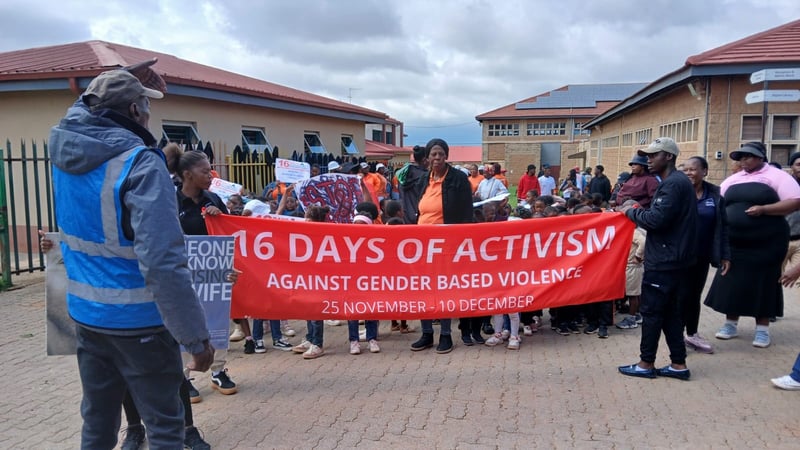
Community testimonies reveal the systemic roots of gender-based violence and why youth development must be part of the solution
9 December 2025, Johannesburg: South Africa does not need more conversations about gender-based violence — it needs action. And that action must begin where violence is lived and felt: in our communities, with our young people.
This is the message from leading non-profit organisation, Afrika Tikkun as the 16 Days of Activism for No Violence Against Women and Children draws to a close. While the global initiative has raised awareness of Gender-Based Violence and Femicide (GBVF), Afrika Tikkun stresses that awareness alone is not enough.
"Our theme for 2025 is 'Let's take action', not more dialogues for the sake of them, but a focus on action," says Vonakalani Mbhungele, programme lead for social support services at Afrika Tikkun.
The urgency is backed by data
The Human Science Research Council's first South African National Gender-Based Violence Study, conducted in 2024, found that while overall violent crime decreased in the second quarter of 2024, gender-based violence crimes increased.
The study revealed that 9.8% of women over 18 had experienced sexual violence in their lifetime, more than 35% had experienced physical and/or sexual violence, and one in eight had experienced financial abuse. Dr Nompumelelo Zungu, presenting the findings, noted that 33.1% of all women aged 18 and older had experienced physical violence in their lifetime — translating to an estimated 7,310,389 women across South Africa.
What Communities Are Saying: 200 Voices, Three Root Causes
During the 16 Days, Afrika Tikkun hosted community events across all seven of its centres, providing a platform for communities to share their direct experiences of GBV. The events were well attended, with up to 200 community members participating in discussions about their understanding and lived experience of gender-based violence.
"At the events, we have discussions and talk about how the community can make a difference and end GBV," says Mbhungele.
Out of these events and others held throughout the year, three recurring themes emerged from community voices — revealing that GBV doesn't exist in isolation. It is fed by poverty, inequality, and lack of opportunity.
1. Cultural conditioning: GBV begins in the family and community setting, which normalises and allows certain destructive behaviours to persist across generations. Violence is learned in the very environments meant to protect young people.
2. Financial hardship: Financial dependence came up repeatedly in community discussions. Many victims of GBV are also victims of financial insecurity, trapped in abusive relationships because they lack economic autonomy or pathways to independence.
3. Lack of education about rights and red flags: Many young people are unaware of their rights and fail to recognise early warning signs of abuse. "When young people are in love, they will excuse bad behaviour and allow their partner to get away with certain things. It is then too late when they realise it is a problem. We need to teach people to be aware of red flags early on," says Mbhungele.
Why Comprehensive Youth Development Is Critical
These findings underscore a reality that policy often overlooks: GBV cannot be addressed through awareness campaigns or emergency response alone. It requires structural intervention that addresses the conditions in which violence takes root.
Afrika Tikkun's Cradle-to-Career 360° model is designed to address these conditions at their source. The organisation's Ignite Programme for young urban men and women provides holistic education that strengthens socio-emotional well-being and teaches essential life skills, including the qualities of healthy, supportive relationships. The NPO also provides counselling and parenting workshops to teach more tolerant and supportive parenting styles.
When young people have economic opportunity, they are not financially trapped. When they receive education about healthy relationships and their rights, they can identify abuse before it escalates. When families receive parenting support, destructive behaviours are less likely to be normalised. When communities are equipped with resources and mental health services, they become safer — not just socially, but economically.
From Awareness to Measurable Action
"This year during the 16 Days of Activism for No Violence Against Women and Children we have been telling communities that they have the information they need, and now they must take action. For example, if you need counselling, you can approach us or one of our stakeholders in the community and take that important step to seek help."
The choice is not between combating GBV and building South Africa's workforce. The two are inseparable. Protecting young people, empowering communities economically, and preparing the next generation for meaningful work are all part of the same mission: breaking the cycle of violence by creating spaces where young people can thrive, not merely survive.
As the 16 Days of Activism concludes, the question is whether South Africa is ready to shift from symbolic support to sustained investment in comprehensive youth development — the kind that addresses root causes, not just symptoms.
Submitted on behalf of
- Company: Afrika Tikkun
- Contact #: 1
- Website
Press Release Submitted By
- Agency/PR Company: Angelfish PR and Events
- Contact person: Angelfish PR and Events
- Contact #: annie@angelfis
Get new press articles by email
Latest from
- New Champions Crowned at The Glen Leg of South Africa's Biggest Mall-Based Gaming Tournament
- CapeGate turns Centre Court into a penalty shootout this weekend
- Franschhoek is famous for wine. Three kilometres down the road, it’s famous for something else.
- Table Bay Mall turns up the gaming action with 2026 Hyprop MTN SHIFT Gaming Experience
- The importance of leadership feedback to shift the behaviour holding the organisation back
- Young Engineers Shine as Inaugural YEM Hackathon Celebrates South Africa's Next Generation of Innovators
- Cryolipolysis At @Sandton Spa Offers Non Surgical Fat Reduction From R1100 Per Area
- Pilates Sculpt - Brewing Belonging - How Starbucks Sea Point Became More Than a Coffee Shop
- Your pharmacist is there to help - Why South Africans can trust their local pharmacy professional
- Canal Walk takes flight with Peter Pan for a 24th year of winter theatre magic
- The CapeGate Ice Rink returns with a bigger, brighter winter adventure
- The winter shakedown - 7 bulking mistakes that are costing you gains
- Woodlands Mall winners return to the podium at MTN Shift Gaming Experience
- Game On - The MTN SHIFT Gaming Experience Heads to The Glen
- What does it take to summit Everest? Angela Yeung is about to tell you
The Pulse Latest Articles
- Private Intimacy Experiences Are Becoming More Personal As Consensuality Launches The Inner Circle (July 10, 2026)
- What We Miss When We Focus Only On Behaviour (July 6, 2026)
- Bundox Moves Beyond Safari Packages With “experience Our Wild Africa” (July 3, 2026)
- Tutor Doctor South Africa Celebrates Double Award Wins (June 30, 2026)
- Rethinking Performance: Part 5 Aligning Judgement In Performance Evaluation (June 30, 2026)