
South Africa’s Youth Are Not Falling Behind, The System Is
Written by: ORT SA Save to Instapaper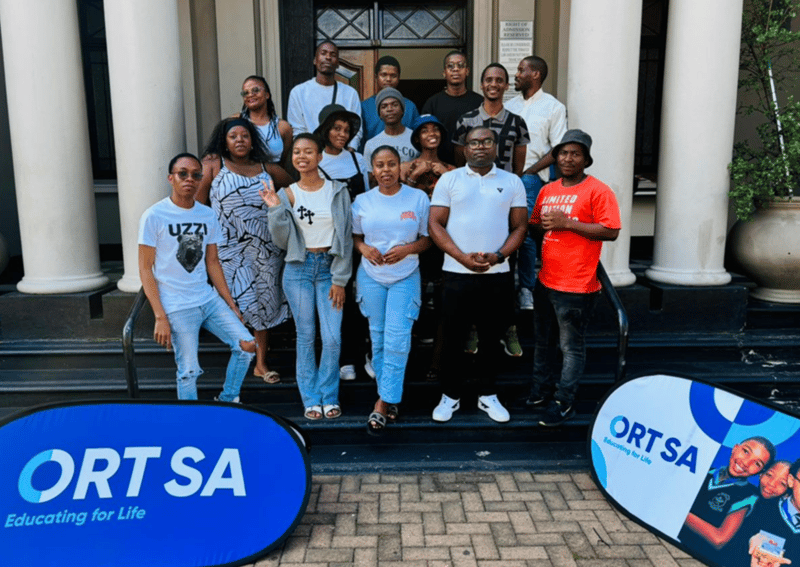
South Africa is producing more graduates than ever before, yet employers across industries continue to report a shortage of job-ready skills. At the same time, youth unemployment sits at over 60% percent, one of the highest rates globally. The contradiction is stark, a growing pool of qualified young people on one side, and an economy increasingly shaped by data, automation and analytics on the other. Somewhere between the lecture hall and the workplace, alignment is being lost.
This disconnect is not the result of a lack of talent. It is the result of pace. The digital landscape is transforming how organisations operate in real time, changing how risk is assessed, how audits are conducted and how decisions are made. Education systems, however, are struggling to move at the same speed. As a result, many capable young South Africans enter the labour market academically prepared, but professionally underexposed.
For employers, this gap translates into longer onboarding cycles, higher training costs and roles that remain unfilled. For graduates, it often means stalled careers, contract work, or exclusion from sectors they are otherwise qualified to enter.
The Growing Importance Of Data Literacy
One of the clearest pressure points is data literacy. Across finance, technology, auditing and the public sector, the ability to interpret, analyse and communicate data has become foundational rather than specialist. Yet access to applied, industry-aligned data training remains limited, particularly for students and early-career professionals without the means to pursue private courses or unpaid experience.
Bridging The Gap Through Targeted Programmes
In this context, a small number of targeted interventions are beginning to demonstrate what alignment can look like. One such example is the Victor Daitz Foundation Big Data Programme implemented by ORT South Africa (ORT SA), which focuses less on abstract instruction and more on preparing graduates for the realities of modern workplaces. Rather than treating data analytics as a purely technical discipline, the programme integrates analytical capability with professional exposure, collaboration and problem-solving, the practical conditions under which data is actually used in organisations.
Graduate Success Story: Sandile Mgobhozi
For Sandile Mgobhozi, a recent graduate of the programme, that structure proved decisive. At the start of 2025, Mgobhozi had already set his sights on a career in data, but was attempting to teach himself while completing his undergraduate degree. “I had the motivation,” he says, “but no structure, no guidance, and no one around me who really understood the space.” His exposure to data tools was basic and fragmented, with little sense of how they translated into real business contexts.
Through the programme, that changed. Working with platforms such as SQL, Power BI, Python and cloud-based tools, Mgobhozi began developing what he describes as data intuition, learning how to think through problems rather than simply operate software. Today, he is a Business Intelligence Intern at one of South Africa’s leading retail companies, Cape Union Mart, while completing his degree. His career ambitions have since sharpened, with a growing focus on data engineering, a shift shaped by hands-on exposure rather than abstract theory.
Graduate Success Story: Fikiswa Mabaso
A similar pattern is evident in the trajectory of Fikiswa Mabaso, a member of the programme’s 2024 second cohort. After completing the programme, Mabaso entered a graduate programme with OpenText, where she was placed at SARS, before progressing to an internship at Deloitte. She now works as an IT Auditor.
“The programme helped me bridge the gap between being a student and becoming a professional,” Mabaso says. “It gave me the confidence to apply what I knew in a real working environment.”
Implications For Employers And The Economy
For employers, these outcomes point to a practical advantage. Graduates who arrive with applied data skills and an understanding of workplace expectations shorten onboarding cycles and strengthen organisational capacity from the ground up.
At a broader level, the implications are significant. South Africa’s youth unemployment crisis is often framed as a numbers problem, but it is equally a relevance problem. Without closer alignment between skills development and how the economy is actually changing, the gap will continue to widen, regardless of how many qualifications are produced.
A Path Forward Through Practical Solutions
What initiatives like Victor Daitz's ORT SA Big Data Programme suggest is that employability is not an abstract ideal. It can be designed for, deliberately and practically, when education responds directly to industry need. As South Africa confronts the twin pressures of digital transformation and youth unemployment, solutions that quietly deliver outcomes rather than promises may offer the clearest path forward.
For more information about ORT SA, please go to: https://www.ortsa.org.za/.
Submitted on behalf of
- Company: ORT SA
- Contact #: 1
- Website
Press Release Submitted By
- Agency/PR Company: Angelfish PR and Events
- Contact person: Angelfish PR and Events
- Contact #: annie@angelfis
- Website
Get new press articles by email
Latest from
- What 93 days alone at sea can teach business leaders about surviving a storm
- Last chance to enter CapeGate Shopping Centre’s CG Schools Boerie Braai Challenge Competition with R20k up for grabs
- Clearwater Mall gets you off the couch and onto the track
- Beauty takes centre stage at Canal Walk this Women’s Weekend
- South Africa’s Entrepreneurship Education Problem
- Why you shouldn’t be the most valuable person in your business
- The quiet heroes of everyday healthcare - Why pharmacy professionals deserve our trust
- The subtle art of saying no By Penelope Meniere, National Marketing Manager at Workshop17
- Table Bay Mall Crowns New Champions in South Africa’s Biggest Mall-Based Gaming Tournament
- Are you actually absorbing the supplements you take?
- This Mandela Day, South Africa Unites to Honour the Power of Nurturing Fatherhood
- New Qualification Opens Career Pathways in South Africa’s Digital Banking Sector
- Vegetables disappear from South African plates when winter hits
- Clearwater Mall calls all gamers for the 2026 MTN SHIFT Gaming Experience
- Corlett Drive gets its hands dirty this Mandela Day with Starbucks and 919fm
The Pulse Latest Articles
- Gloot Partners With Rachel Kolisi's Falling Forward Roadshow (August 5, 2026)
- National Play Day Shines A Spotlight On South Africa's Childhood Play Crisis (August 5, 2026)
- Celebrating The Women Building Futures On Behalf Of Clive Robinson, Md Of Tutor Doctor Sa (August 5, 2026)
- Shorter Safari Getaways Are Reshaping The Greater Kruger Stay (August 5, 2026)
- Philippe Starck: The Visionary Designer Behind Axor's Most Iconic Creations (August 5, 2026)