
Respecting the Curl - The Evolution of Afro Hair Restoration
African patients have some of the highest failure rates in hair transplantation. Not because their hair is more difficult, but because the entire field was built around follicles that grow straight down.
When you apply the same techniques to hair that spirals beneath the scalp, damage is almost guaranteed.
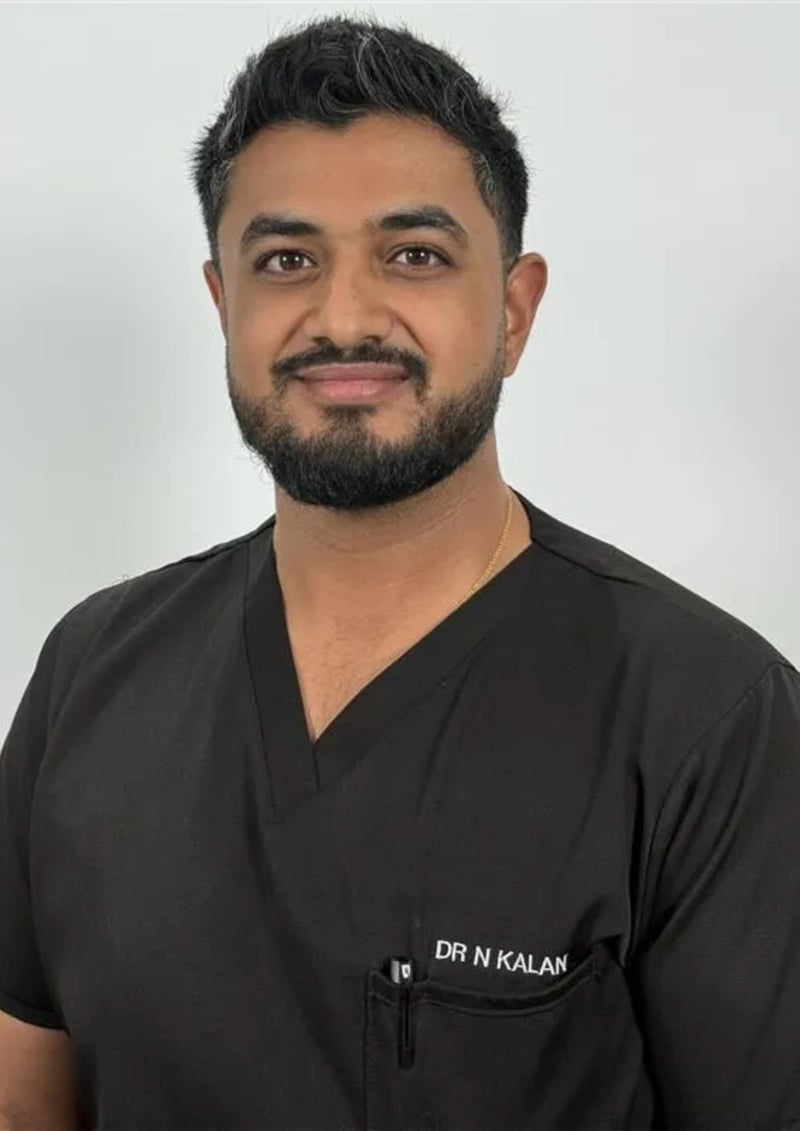
"We're taught to extract follicles at a perpendicular angle," says Dr Nishal Kalan, surgeon and Afro-textured hair specialist at Alvi Armani South Africa. "But Afro hair curves and sometimes spirals completely beneath the skin, which means that standard punches slice right through the shaft. We often consult patients who have had two, sometimes three failed procedures elsewhere. The transection rates are catastrophic."
The statistics reinforce the problem. African patients are 15 times more likely to develop keloid scars. Their hair is 30% thicker but grows at half the density of Caucasian hair - a combination that demands precision, not guesswork.
Alvi Armani has already developed the solution. Their global clinics, from Beverly Hills and London to Johannesburg, use curved extraction punches and skin-responsive Follicular Unit Extraction (FUE) devices calibrated specifically for Afro-textured hair. Every angle and depth is adjusted to follow the follicle's natural spiral.
Post-procedure, patients receive Ampligraf™ bioactive treatment and AMP-T PRP therapy to accelerate healing and minimise scarring.
When Styling Becomes A Stressor
Genetics aren't the only culprit. For African women especially, styling practices have become a crisis point.
Decades of tight braiding, weaves, and chemical relaxers are driving an epidemic of traction alopecia - hair loss caused by chronic tension on the follicle.
Dr Kalan recently consulted with a South African media professional who has worn braids for most of her adult life. By the time she sought help, scarring had progressed beyond what transplantation could address.
"We opted for regenerative therapy instead, which entails coaxing dormant follicles back to life where possible."
The tragedy isn't just the hair loss itself, but how long women wait before seeking help.
Many assume nothing can be done. Others are told their hair is "just difficult" or that thinning is inevitable.
"Five years can make the difference between saving a hairline and losing it permanently. The industry has failed these patients. Not due to a lack of solutions, but by never offering them in the first place."
Precision, Not Guesswork
"Afro hair actually gives us an advantage. Because it's thicker and curlier, it creates more visual volume. We can achieve full, natural-looking coverage with fewer grafts, but only if we respect the biology."
The clinic has treated thousands of African patients, restoring not just hairlines, but also beards, eyebrows, and crowns.
Through its partnership with the Cancer Association of South Africa (CANSA), they're extending free consultations to South African cancer survivors facing treatment-related hair loss, applying the same precision techniques to a community that's been largely overlooked.
"Hair loss doesn't care about your story," Dr Kalan concludes. "But your story should determine your treatment. That's what we've been missing."
For a generation of African patients who were told their hair was too complicated, too risky, and too different, the narrative is finally shifting.
The science and tools exist. Now it's about access, expertise, and refusing to accept that "nothing can be done."
Release information
Issued on behalf of
Alvi Armani South Africa
Media contact
Alvi Armani South Africa
Alvi Armani South Africa