
Mining Without Compromise - Why ESG in Africa Must Be Built into Operations, Not Added On
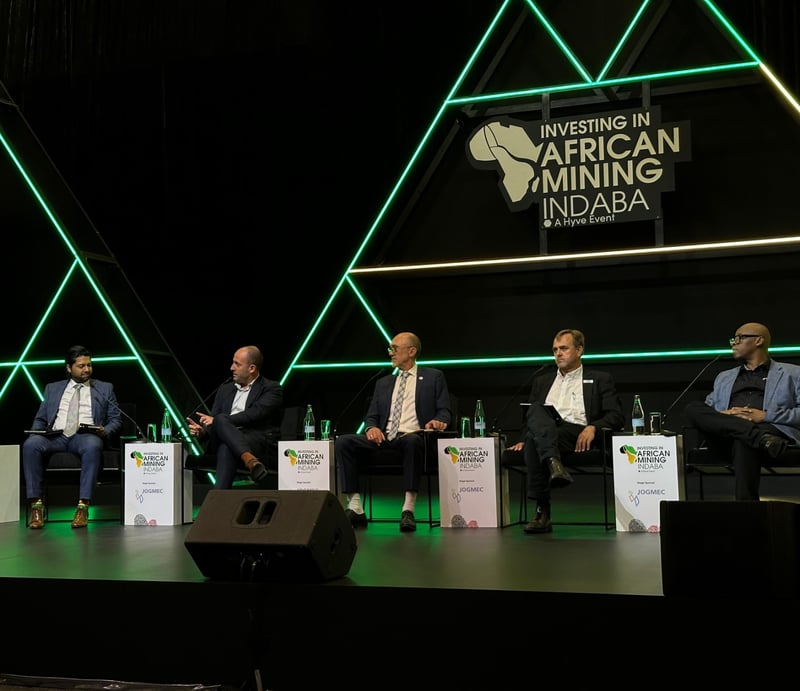
At Mining Indaba 2026, the conversation shifted from ambition to accountability.
The question was direct: can mining scale up production in Africa while moving towards zero waste and lower emissions?
For Michelin, the answer lies in practical decisions made every day on site.
Speaking during the “Mining Without Compromise” panel at the Technology & Innovation Hub, Amaury Vadon, VP Sales Africa, India & Middle East and Commercial Director for Sub-Saharan Africa at Michelin, made a clear point:
“ESG only lasts if it strengthens operations. If it competes with productivity or reliability, it will not survive.”
Many of the technologies needed to reduce emissions already exist. Clean energy solutions are expanding. Electrified equipment is advancing. Digital tools are improving visibility underground and on haul roads.
The challenge is not technology alone. It is integration.
In Africa in particular, reliability, uptime and delivery timelines often drive decision-making. When trade-offs arise, production continuity usually comes first.
That means sustainability must lower risk, improve productivity or reduce lifecycle cost. Otherwise, it becomes an add-on.
During the discussion, Vadon drew attention to a component that rarely headlines ESG debates: TYRES.
In surface mining, fuel is one of the largest operating costs. Tyres follow closely behind. Yet tyres also play a direct role in how much fuel a truck consumes.
When a loaded haul truck moves across a site, its tyres flex and generate heat. That heat represents lost energy. The more energy lost, the more fuel burned.
Energy-efficient tyre design reduces that loss. Lower rolling resistance allows more of the truck’s power to move material forward instead of being absorbed into heat.
“Small efficiency gains per truck can translate into meaningful reductions across a fleet,” said Vadon.
“And those gains do not require a new mine design. They require smarter lifecycle decisions.”
Michelin’s approach combines tyre design with predictive monitoring, pressure management and haul road optimisation. The goal is simple: extend tyre life, reduce downtime and lower fuel consumption at the same time.
For operators, that links sustainability directly to performance.
Therefore, End-of-Life is no longer optional.
As mines grow, so do stockpiles of end-of-life tyres. In many regions, these piles become a visible symbol of unmanaged waste.
At Mining Indaba, Vadon addressed how Michelin is approaching end-of-life tyre management in South Africa. Through reverse logistics and pyrolysis processing, used tyres are converted into recovered materials such as steel and carbon-based products, which are then reintroduced into local industrial value chains.
“Circularity must work in the real world,” said Vadon. “It must function within local infrastructure and deliver value locally. Otherwise, it remains a theory.”
For African mining companies facing increasing scrutiny from global investors and customers, waste management is becoming as important as emissions reduction.
One of the strongest themes from the panel was resilience.
Commodity cycles fluctuate. Capital tightens. ESG initiatives that sit outside core operations are often the first to be paused.
By contrast, solutions that improve safety, reduce downtime and lower fuel use tend to remain.
Michelin describes this approach as “Better Mining” - working alongside operators to embed safety, efficiency and sustainability into daily operations rather than layering them on top.
“Mining without compromise is possible,” Vadon concluded. “But it requires discipline. Sustainability must be designed into the system from the start.”
As demand for critical minerals accelerates, African mines are under pressure to deliver both growth and responsibility. The message from Mining Indaba was clear: the future will belong to operators who can do both - and prove it.
Release information
Issued on behalf of
Michelin
Media contact
Pekuzi Projects Africa
Naledi Tlhowe