
Tackling E-Waste In South Africa
Written by: MyPressportal Team Save to Instapaper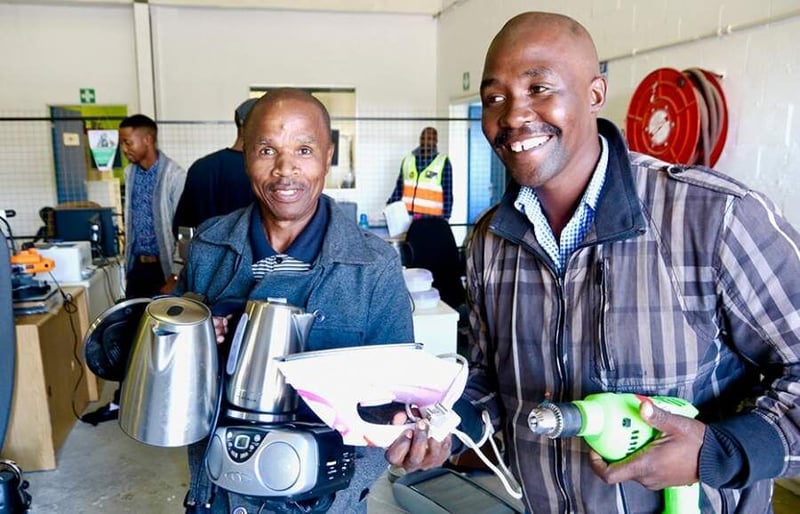
PIONEERING LOCAL NGO APPLIANCE BANK, JOINS AMBITIOUS INTERNATIONAL E-WASTE RECYCLING INITIATIVE
In order to tackle South Africa’s rising e-waste challenge, key local and international stakeholders have joined forces to launch an ambitious project which is set to bring about economic opportunities while ensuring workable and safe solutions for the management of e-waste. In order to tackle South Africa’s rising e-waste challenge, key local and international stakeholders have joined forces to launch an ambitious project which is set to bring about economic opportunities while ensuring workable and safe solutions for the management of e-waste.
Rooted in the global Sustainable Recycling Industries (SRI) programme (2020 – 2023), the local chapter of the SRI project aims to build capacity for sustainable e-waste recycling, by supporting related national initiatives and implementing pilot ventures.
The SRI project in South Africa involves various stakeholders including The Appliance Bank (TAB), a training programme for unemployed men that gives them the technical skills needed to repair damaged and customer- returned small appliances.
In support of the circular economy, TAB prevents damaged appliances from being disposed of in landfills.
Job creator assisting in training
TAB came onboard to create training materials which will support the collaboration and help scale the intended impact of the SRI project in South Africa. The pilot project is kicking off in iLembe, KwaZulu-Natal which will see TAB working with waste pickers and providing technical appliance repair training.
Commenting on the initiative Tracey Gilmore, Chief Executive Officer and Co-Founder of TAB says, “We are extremely excited to be onboard and honoured that the SRI team reached out to us to join the conversation and be part of this wonderful initiative. South Africa can only benefit from projects like the SRI that will create a more inclusive economy and contribute to sustainable growth.”
Bringing new opportunities for sustainable economic growth
The SRI project South Africa is part of the global SRI programme, with participation of Egypt, Ghana, South Africa, Colombia and Peru. SRI aims at building capacity for sustainable e-waste recycling by supporting national initiatives and implementing pilot projects. The first phase of the SRI programme was implemented between 2013 – 2018 and is now in its second phase (2019 – 2023). The overall development objective of the SRI programme (Phase 2) is to create favourable framework conditions, which enables the development of a sustainable recycling industry for e-waste and any related waste streams.
In all its activities, the SRI programme strives for an inclusive approach of enabling beneficial economic conditions for both the formal industry stakeholders and the informal sector. Therefore, the programme leverages steps and strategies leading to both a resource preserving circular economy transition and contributing to actions on climate change mitigation through the recovery and reintegration of secondary raw materials into industrial processes. The SRI programme is funded by the Swiss State Secretariat of Economic Affairs (SECO) and is implemented by the Institute for Materials Science & Technology (Empa) and the World Resources Forum (WRF).
Key outcomes and deliverables envisaged for South Africa
The national SRI project team aims to develop an e-waste policy (on national and local level), define minimum working conditions for the formal e-waste value chain partners, and facilitate strategic informal sector integration. It will also assist with the development of both auditing skills and capacity to assess e-waste value chain operators and oversee the development of a national e-waste learner curriculum. The pilot project in iLembe will see the team work with the informal waste sector to collect e-waste via a newly developed app.
South Africa among the most guilty of e-waste pollution on African continent
E-waste is the fastest-growing domestic waste stream in the world. According to the e-Waste Association of South Africa (eWasa), each individual in South Africa generates about 6.2kg of e-waste and the Department of Environmental Affairs estimates an annual national tally of 360 000 tonnes. A technology economy study in 2014 revealed that more recycling of e-waste could bring notable benefits to South Africa. If the country manages to increase its recovery for recycling rates (currently hovering around 10%) up to 30%, it will yield an additional 32 million Rands per year injection into the weak South African economy.
One man’s waste is another man’s gold
TAB, which forms part of the award-winning non-profit organisation, The Clothing Bank (TCB), provides a two-year training programme for unemployed men to establish their own sustainable businesses. The men, most of whom are fathers, repair the donated household appliances and sell them for a profit in their communities.
Last year, TAB had 89 active businessmen who sold goods for a profit of R5,4 million and around 22 000 units / e-waste materials were recycled. Piloted in 2015 as a result of a strategic partnership with The Clicks Group, TAB has grown to have operations in Cape Town, Johannesburg and Durban.
TAB provides beneficiaries with extensive financial, business and life-skills training, as well as coaching and mentoring to help them on their journey to self-determination. In 2018, the TAB programme formalised its technical training and developed a comprehensive modular-based curriculum covering all aspects related to electricity and appliance repair. “Apart from all the research learnings we will obtain from the SRI project, it provides an essential platform to build on our programme through improving our training material, continuing our contribution to improving our country’s entrepreneurial ecosystem and aiding job creation,” concludes Gilmore.
Get new press articles by email
We submit and automate press releases distribution for a range of clients. Our platform brings in automation to 5 social media platforms with engaging hashtags. Our new platform The Pulse, allows premium PR Agencies to have access to our newsletter subscribers.
Latest from
- 7 Business Trends Your SME Can Leverage In 2026
- Sadilar Amplifies Visibility And Impact During Conference Season
- Future-ready Logistics- 5 Shifts TO Watch In 2026 (SUB-saharan Africa)
- Dunlop Urges Motorists To Prioritise Tyre Safety On The Busy Joburg To Cape Town Festive Route
- Poverty Trends Report Shows National Progress But Flags Growing Challenges In Gauteng
- SDG Challenge SA 2025 Highlights The Power Of Youth Innovation In Shaping A Sustainable Future
- Experienced Industry Leader Pauli Van Dyk Named Dean Of AFDA’s Upcoming Hatfield Campus
- South Africans Keep Tourism Alive As Homegrown Travel And Local Spending Rise
- Pretoria Student Wins Global Excel Esports Competition
- AfDB Steps Up Support For Somalia With $76m Investment In Roads And Regional Integration
- Corporate Law Experts Warn Directors Of Serious Consequences For Improper Transaction Approval
- New 3% Inflation Target Begins To Shift Expectations In South African Economy
- Retail As A Development Catalyst Drives New Africa Developments’ Inclusive Growth Strategy
- Collaborative SEF Model Shows How Civil Society And State Can Rebuild Economic Trust
- Shumani Accelerates Industrial Growth With Bheka Forklifts And New Equipment Plans For 2026
The Pulse Latest Articles
- Education Is The Frontline Of Inequality, Business Must Show Up (December 11, 2025)
- When The Purple Profile Pictures Fade, The Real Work Begins (December 11, 2025)
- Dear Santa, Please Skip The Socks This Year (December 10, 2025)
- Brandtech+ Has 100 Global Creative Roles For South African Talent (December 9, 2025)
- The Woman Behind Bertie: Michelle’s Journey To Cape Town’s Beloved Mobile Café (December 9, 2025)