
SANBWA endorses Plastics SA’s call for behaviour change to cut plastic waste, boost plastic recycling
Written by: MyPressportal Team Save to InstapaperThe South African National Bottled Water Association (SANBWA) has endorsed Plastics SA’s view that only a behaviour change on the part of global citizens will have a significant impact on the amount of plastic in the litter streams.
Plastics SA Executive Director, Anton Hanekom, recently wrote: “Over the past 25 years, our position has never changed: Plastics don’t litter – people do! Every piece of plastic has value and has the potential to be repurposed and recycled into something new.
“Whilst a battle rages on around the issue of litter in the environment, Plastics SA and its members will continue to make a tangible difference through various clean-up operations such as coordinating South Africa’s participation in the International Coastal Clean-Up, Operation Clean-Sweep, river catchment projects and ongoing education campaigns around the country.”
He pointed to the fact, that each July, people across the globe take part in ‘Plastic Free July’, an international movement that aims to reduce the amount of plastic waste in the environment by encouraging fellow citizens to make the shift towards long-term, environmentally-friendly habits.
Unfortunately, over the past few years, numerous independent scientific studies been conducted to compare the environmental footprint of plastics versus other packaging materials, e.g. glass, paper or biodegradable packaging. Time and again, these life cycle analyses have proven that plastics require less energy, reduce waste and have lower carbon emissions. Most recently, said Hanekom, the CSIR released their findings that confirmed that reusable, plastic shopping bags are the best option for South Africa1.
“After comparing 21 environmental and socio-economic indicators, including water use, land use, global warming, the impacts of pollution, impact on employment and the affordability for consumers, the CSIR confirmed that locally produced plastic shopping bags have the lowest environmental footprint compared to carrier bags made from alternative materials, or even biodegradable bags – provided they that they are re-used.
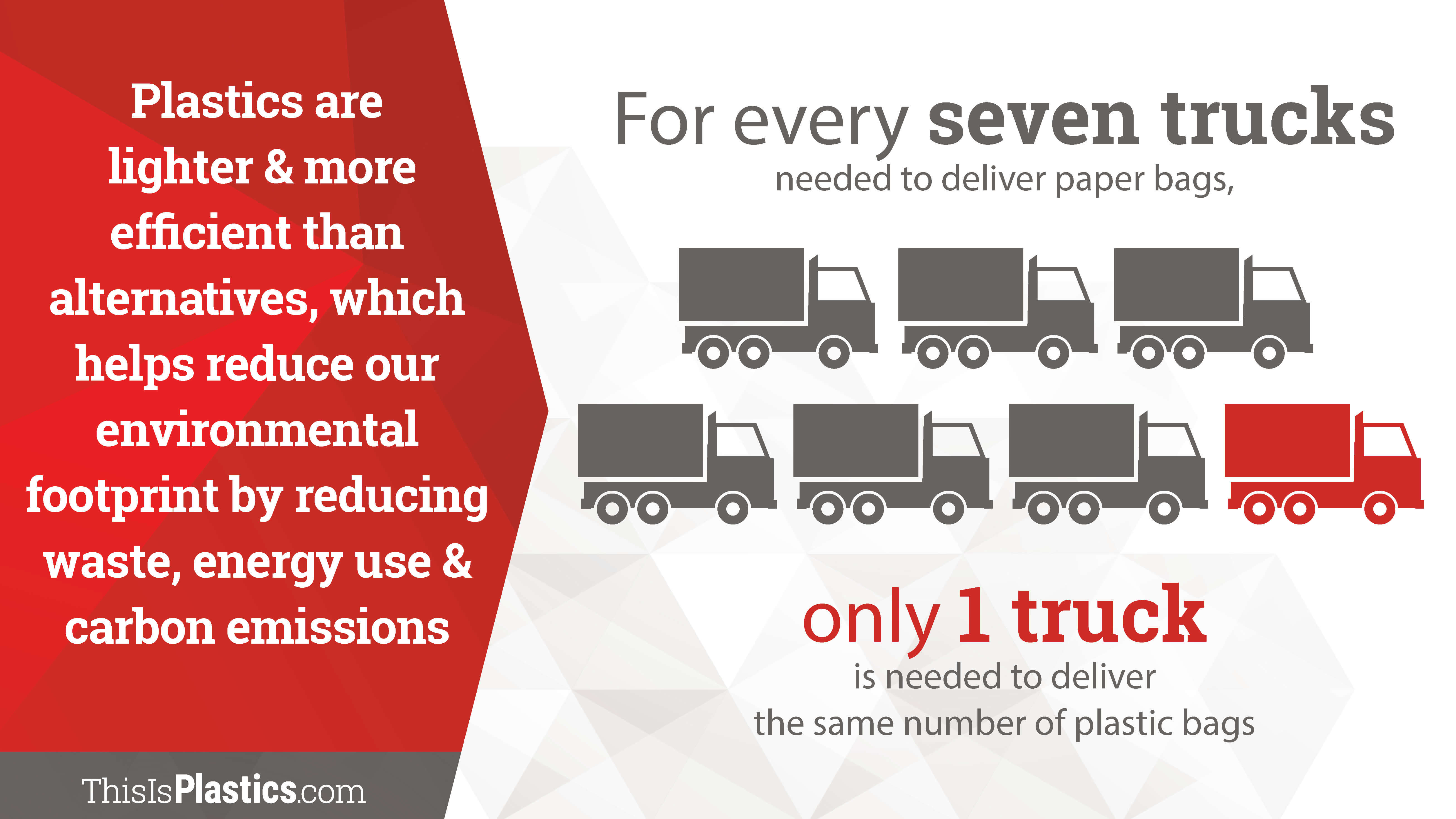
“Even more compelling is the findings of Danish researchers who found that cotton bags need to be re-used 7 100 times to have the same cumulative environmental impact as using classic plastic bags2. For every seven trucks needed to deliver paper shopping bags, for example, only one truck is needed to deliver the same number of plastic shopping bags3, thereby further helping to reduce the environmental footprint and the amount of waste generated,” Hanekom said.
“The findings of studies like these mentioned by Anton as well as that recently conducted by the Green Alliance4 must be taken seriously,” said SANBWA Executive Director, Charlotte Metcalf. “They highlight that switching to aluminium will generate toxic waste, to glass would generate additional carbon emissions, and to carton will create hundreds of tonnes of low-quality waste.
“The message is clear: don’t accept alternatives without considering the proverbial whole picture.”
Metcalf reiterated Hanekom’s key point: “It is also clear that the real issue that needs to be addressed is not the use of plastics, but human behaviour. Every piece of carelessly discarded litter has the potential of ending up in the environment or polluting our oceans. Municipalities that fail to put an effective waste management system in place, not only fail their citizens, but jeopardise the health of our planet as they are inviting a waste crisis.”
The umbrella body representing the entire plastics industry value chain including raw material suppliers, converters and manufacturers, recyclers and machine suppliers, Plastics SA is a founding member of the South African Initiative to End Plastic Pollution in the Environment and a signatory of the Declaration of the Global Plastics Associations for Solutions on Marine Litter and the Plastics Pact.
Hanekom pointed out that the local plastics industry creates jobs for more than 60 000 South Africans. During 2018 alone, South Africa converted more than 1,8 million tons of polymer into plastic products. During the same year, recycled plastic waste tonnages increased by 12.2%, giving South Africa a collection rate of 46.3% and making the country a world leader in mechanical recycling.
-- ENDS --
Sources:
- https://wasteroadmap.co.za/completed-projects/informing-decisions-on-single-use-plastic-carrier-bags/
- https://mybroadband.co.za/news/science/311379-an-inconvenient-truth-banning-plastic-bags-may-do-more-harm-than-good.html
- https://www.thisisplastics.com/wp-content/uploads/Environmental-Footprint.jpg
- https://www.businessgreen.com/bg/news-analysis/3080124/alternative-materials-no-solution-to-bottled-waters-single-use-plastics-crisis-study-argues
Get new press articles by email
We submit and automate press releases distribution for a range of clients. Our platform brings in automation to 5 social media platforms with engaging hashtags. Our new platform The Pulse, allows premium PR Agencies to have access to our newsletter subscribers.
Latest from
- 7 Business Trends Your SME Can Leverage In 2026
- Sadilar Amplifies Visibility And Impact During Conference Season
- Future-ready Logistics- 5 Shifts TO Watch In 2026 (SUB-saharan Africa)
- Dunlop Urges Motorists To Prioritise Tyre Safety On The Busy Joburg To Cape Town Festive Route
- Poverty Trends Report Shows National Progress But Flags Growing Challenges In Gauteng
- SDG Challenge SA 2025 Highlights The Power Of Youth Innovation In Shaping A Sustainable Future
- Experienced Industry Leader Pauli Van Dyk Named Dean Of AFDA’s Upcoming Hatfield Campus
- South Africans Keep Tourism Alive As Homegrown Travel And Local Spending Rise
- Pretoria Student Wins Global Excel Esports Competition
- AfDB Steps Up Support For Somalia With $76m Investment In Roads And Regional Integration
- Corporate Law Experts Warn Directors Of Serious Consequences For Improper Transaction Approval
- New 3% Inflation Target Begins To Shift Expectations In South African Economy
- Retail As A Development Catalyst Drives New Africa Developments’ Inclusive Growth Strategy
- Collaborative SEF Model Shows How Civil Society And State Can Rebuild Economic Trust
- Shumani Accelerates Industrial Growth With Bheka Forklifts And New Equipment Plans For 2026
The Pulse Latest Articles
- Education Is The Frontline Of Inequality, Business Must Show Up (December 11, 2025)
- When The Purple Profile Pictures Fade, The Real Work Begins (December 11, 2025)
- Dear Santa, Please Skip The Socks This Year (December 10, 2025)
- Brandtech+ Has 100 Global Creative Roles For South African Talent (December 9, 2025)
- The Woman Behind Bertie: Michelle’s Journey To Cape Town’s Beloved Mobile Café (December 9, 2025)