
World Environment Day (5 June) - a South African programme is changing how the tourism industry thinks about its impact
Written by: ETC - Africa Save to Instapaper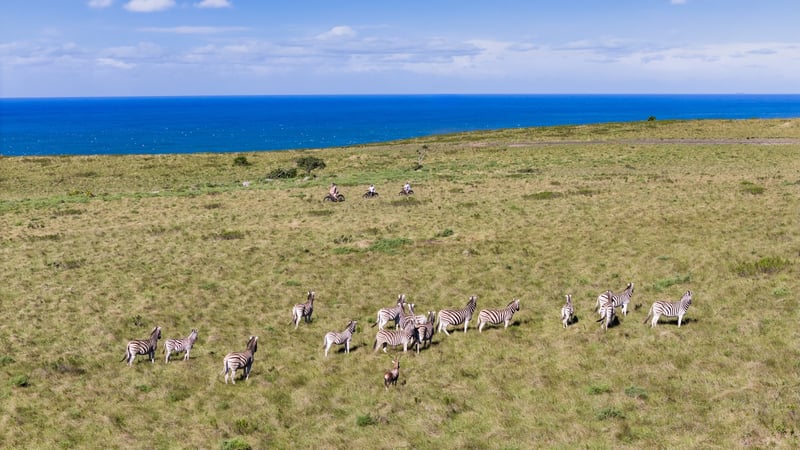
A South African-led initiative is redefining what it means to be a responsible traveller and it’s not about skipping the trip.
DURBAN, 1 June 2026:
With World Environment Day observance on June 5, tourism and travel will no doubt be top of the list of discussions around its impact on the environment and climate change.
Down on the southern tip of Africa, a quiet yet significant shift is underway, changing how the tourism industry thinks about its impact.
A New Approach To Responsible Travel
A pioneering pilot programme led by travel company kimkim, in partnership with the Wilderness Leadership School, ETC Africa, and The Eco Travel Boutique, is helping 25 South African tourism properties measure, understand, and reduce their carbon footprints and giving travellers the tools to make their trips count for more.
South Africa’s wild landscapes are doing more than they look like they’re doing.
For example, the Kruger National Park alone, roughly the size of Wales, or the state of New Jersey stores hundreds of millions of tonnes of carbon in its soils, trees, and grasslands.
These ecosystems are functioning climate infrastructure, and they depend on communities having a tangible economic reason to protect them.
Ethical tourism, structured to channel real revenue into local employment and conservation, is one of the most effective tools for ensuring that reason exists.
The question isn’t whether to visit, it’s whether your visit makes the place stronger.
Measuring Impact
“The greatest environmental challenge isn’t travel it’s disconnection,” says Duncan Pritchard, Director of ETC Africa.
“When guests witness wildlife, engage with local communities, or simply stand in a wild place, that’s when real conservation commitment takes root. Measuring a property’s carbon footprint gives that commitment a measurable backbone and the early data from this pilot has been revealing. Off-grid properties are achieving, on average, half the per-bed-night emissions of their on-grid equivalents. And across the programme, properties that actively measure and manage their footprint are seeing emissions reductions of more than 20% not through radical overhaul, but through the simple discipline of paying attention.”
“Our goal with every traveller is to help them connect to the community and culture of their destination,” says Kaelyn Harris-Vincent, Brand Marketing at kimkim.
“When tourism is done thoughtfully, it really can be a force for good. By year’s end, every participating property will carry Verified Impact branding so travellers can see exactly what their stay is contributing to.”
Eight Things Most Travellers Never Think To Do (But Should)
Beyond the basics, here’s what the most impactful travellers actually do differently:
1. Ask Where The Food Comes From
Food transport accounts for more than 10% of total greenhouse gas emissions at most remote safari properties.
Ask whether produce is sourced locally and know that locally raised meat can have a lower carbon footprint than vegetables flown in from overseas.
Local sourcing matters more than the type of food on the menu.
Properties that can answer this question fluently are usually the ones worth staying with.
2. Skip The Safari Wardrobe
The fashion industry produces more carbon emissions annually than international aviation and shipping combined.
Buying an entirely new wardrobe for a two-week trip, a habit that safari-outfit content has quietly normalised can rival the footprint of the flight itself.
Pack what you have.
Neutral tones are already in most wardrobes.
The wildlife doesn’t care about the brand.
3. Flag Dietary Requirements Weeks Before Arrival, Not At Check-In
Remote safari camps often sit hours from the nearest town.
A last-minute dietary request can mean a 200 km round trip for a single ingredient; unnecessary emissions, unnecessary cost, and a flustered kitchen.
Tell them at booking.
Good operators will be grateful; great ones already ask.
4. Ask For A Guide With Roots In The Area
A guide who grew up in or near the area brings a depth of knowledge that no training programme fully replicates, the seasonal patterns, the local history, the sounds that don’t appear in field guides.
Request one specifically.
And when you tip, tip generously: that money enters a local economy directly.
5. Resist The Urge To Chase The Next Wildlife Sighting
Game drive vehicles are typically the single largest source of carbon emissions at a safari lodge.
Every unnecessary kilometre has a cost.
More importantly, the guests who come home with the best stories are almost never the ones who ticked the most boxes, they’re the ones who sat at a waterhole for an hour, or followed a dung beetle across a road, or asked their guide to stop the vehicle and simply listen.
Don’t push your guide to race between sightings or even better, request more walking safaris.
The bush rewards patience in ways a highlight reel never captures.
6. Choose One Longer Trip Over Two Short Ones
The carbon cost of a long-haul flight is concentrated in take-off and landing.
A two-week trip to Southern Africa carries a meaningfully lower emissions-per-day profile than two separate one-week visits.
The experience is also categorically better, by day three, you’re no longer adjusting.
You’re actually there.
7. Ask About The Property’s Carbon Programme Before You Arrive
Not every lodge that says ‘eco’ has done the work.
Ask whether they track their emissions, whether those figures are independently verified, and what specific conservation projects your stay supports.
Good properties will have real answers.
Others will learn to.
8. Ask How You Can Leave More Than You Took
The best lodges will have answers ready: an anti-poaching initiative you can contribute to, a community garden project, a rewilding programme that needs support.
Ask anyway, even if they don’t.
The questions travellers ask are one of the most underestimated forces in this industry.
Properties pay attention to what guests care about.
If you ask, they notice.
If enough people ask, things change.
Verified Impact By The End Of 2026
The kimkim Climate Action Pilot Programme is implemented through the Wilderness Leadership School, with technical expertise from ETC Africa and market access supported by The Eco Travel Boutique.
By the end of 2026, all participating properties that complete the programme will carry Verified Impact branding, providing travellers with transparent, independently verified sustainability credentials.
Submitted on behalf of
- Company: ETC - Africa
- Contact #: 0833263235
- Website
Press Release Submitted By
- Agency/PR Company: Versfeld & Associates
- Contact person: Sharlene Versfeld
- Contact #: 0833263235
- Website
Get new press articles by email
Communications and Marketing consultancy working mostly in creative industry including film, arts, culture, as well as conservation and environment.
Latest from
- Durban FilmMart Introduces Equitable Coproduction Programme with EAVE Experts
- Durban-based initiative targets 13,000 tonnes of plastic recovery across KZN
- 13th European Film Festival South Africa Returns to Durban
- JOMBA! @ The Market Theatre Returns With HEROES Mantsoe Nyamza and International Programmes
- SPAR KZN Schoolgirls’ Fast 5’s Netball Challenge Durban Central Regionals - Durban Girls’ College - Saturday 29 August
- ISPA's Gabriel YoungStar takes Pick of the Platform at JOMBA! LIVE OPEN HORIZONS 2026
- Dr Ismail Mahomed honoured with 2026 JOMBA! Contemporary Dance Experience Lifetime Achievement Award
- Tourism's Carbon Story Is Bigger Than Its Footprint
- DIGITAL JOMBA! 2026 brings free screen dance from South Africa, France, Tanzania and Brazil
- Acts of Care - Immersive Exhibition Brings Township AIDS Project Archive to Life
- South African Industry Organisations Featured at the 17th Durban FilmMart
- SPAR KZN Schoolgirls’ Fast 5’s Netball Challenge Southern KZN Regional - Kokstad College - Saturday 22 August
- Majara earns maiden SPAR race win in Pietermaritzburg
- 13th European Film Festival South Africa Programme Announced
- JOMBA! FEMME FORWARD Residency honours Women's Month with new generation of Durban screen dance artists
The Pulse Latest Articles
- The 1% Problem: Are We Misjudging Cryptocurrency? (September 7, 2026)
- N3yh Moves Beyond Sleepwear With Its First Leisurewear Collection (September 3, 2026)
- N3yh Moves Beyond Sleepwear With Its First Leisurewear Collection (September 2, 2026)
- Safari Travelers Are Asking What Happens Beyond The Game Drive (September 2, 2026)
- Kruger National Park Is Waking Up For Spring (September 2, 2026)