
Upgrading rural water infrastructure – lessons learned
Written by: Megan van Wyngaardt Save to Instapaper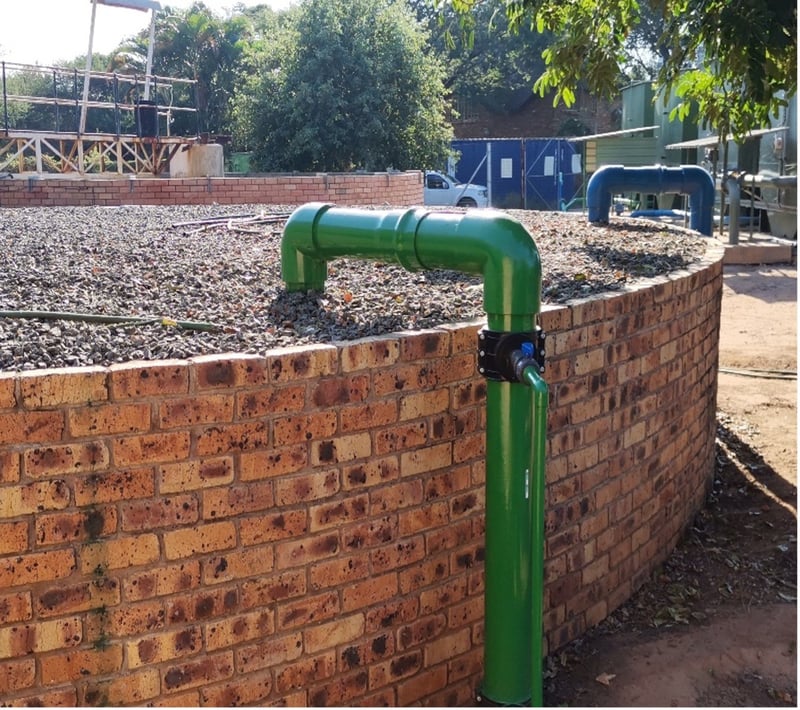
In the face of growing water concerns across South Africa, being a water scarce country and having many unsustainable infrastructure projects, the completion of the Marloth Park Water Package Plant upgrade stands as a valuable case study in rural water infrastructure delivery.
According to Chalmers Pagiwa, MD of Lubisi Consulting Engineers, in working with Nkomazi Local Municipality, the firm was able to navigate technical, logistical and community challenges to deliver a sustainable solution for a growing community. “The lessons we and the municipality learned during this exercise can offer guidance for similar projects in the country, which will secure water supply for the future,” he notes.
Marloth Park, in the lowveld region of Mpumalanga Province, has nearly 19,500 residents and faced severe water shortages due to an outdated 1.5Ml/day treatment plant. The project’s objective was to install an additional 2Ml/day water package plant, raising total capacity to 3.5Ml/day to meet current and future demand.
“While Marloth Park is a sleepy, holiday town with a significant number of properties being used for tourism or as holiday homes, the uptick in population over holiday seasons, as well as the number of incoming families, required an overhaul of their water package plant, but it also required community engagement to ensure that everyone was on the same page,” Pagiwa explains.
A dedicated Project Steering Committee, including residents’ associations and the ward councillor was established, which ensured regular communication and nurtured trust between stakeholders. “In the past, local communities were often not included in the planning and roll out of infrastructure, which caused frustration and uncertainty,” says Pagiwa.
The appointment of a Project Liaison Officer (PLO) further streamlined local labour recruitment and facilitated ongoing dialogue between the contractor, community and municipality.
Pagiwa explains that the project set out to prioritise labour-intensive methods and skills transfer to uplift the surrounding community while construction was in progress.
“As per SANS 1921-5, we maximised local employment: 10 jobs were created (60% youth, 40% women), and five plant operators received hands-on training,” he notes, adding that on-the-job training not only met project needs but also provided the community with valuable skills for plant operation and maintenance.
Civil works for the project included reinforced concrete clarifier slabs, tanks and a chlorine building, while mechanical/electrical works involved advanced dosing systems, clarifiers, filters and control systems.
On the mechanical and electrical works, the polymer dosing system was designed for flows up to 175 m³/h, with duty and standby pumps (0–35 l/h), 500l storage tanks, dosing piping, pressure relief valves, pulse dampers and inline flash mixing. During the project, the flow rate measurement was also prioritised for operational accuracy.
The project also required new switchboards, switchgear, cables, pump control and communication systems, plus external lighting and lightning protection for all new installations.
“As there were many elements to this project, it required close coordination among civil, mechanical and electrical contractors. A clear delineation of responsibilities and proactive liaison was crucial in avoiding delays and ensuring quality delivery,” Pagiwa highlights.
All work was completed to contractual standards, with required lab tests and approvals conducted under the supervision of Lubisi.
Project challenges
While no accidents were reported during the project, which underscored the effectiveness of health and safety measures, the project did experience delays due to adverse weather and late delivery of mechanical equipment and, as such, an extension of three months was granted. This, Pagiwa notes, highlighted the need for flexible project timelines and contingency planning.
“Delays in one discipline can stall various dependent activities, which is why we require adaptable scheduling and reallocation of resources to keep other workstreams productive. Flexible planning further allowed for proactive financial management and reduced the risk of budget overruns when changes were necessary,” Pagiwa states.
Despite the delays faced, the contractors and Lubisi maintained effective cooperation, which facilitated smooth adjustments to the schedule. This underscores the importance of assembling experienced teams and establishing robust communication and reporting channels, so decisions about extensions or resource redeployment can be made swiftly and transparently.
The completed upgrade now provides Marloth Park with reliable, 24-hour water access, directly addressing the community’s needs. The project further fostered a positive legacy of local employment, skills development and strengthened community-municipality relations.
This upgrade, Lubisi avers, illustrates the value of integrating advanced engineering, robust quality control and community-focused labour practices in rural infrastructure projects. “With the right plans in place, thorough stakeholder engagement, technical integration, adaptability to challenges and a commitment to local capacity building, our country can leverage off existing plans and projects to deliver sustainable, high-impact water solutions to rural communities,” Pagiwa concludes.
Image and caption:The project’s objective was to install an additional 2Ml/day water package plant, raising total capacity to 3.5Ml/day to meet current and future demand
About Lubisi Consulting EngineersLubisi Consulting Engineers is a professional services firm, which provides Water Resources Engineering and Structural Engineering Services. The firm was founded in 2004 and has since its inception supported and provided services to government institutions and the private sector.
Press Release Submitted By
- Agency/PR Company: SWM Communications
- Contact person: Megan van Wyngaardt
- Contact #: 0743366772
- Website
Get new press articles by email
The Pulse Latest Articles
- Fast, Connected, Screen-free: The Big Toy Trends Defining Christmas 2025 (December 4, 2025)
- Dezemba Coolerbox Culture: The Small Summer Swaps That Make A Big Difference (December 4, 2025)
- Amarantine Travels Launches Summer Season Tours Showcasing South Africa’s Culture, Coastline And Winelands (December 3, 2025)
- Steinmüller Africa Teams At Kriel And Majuba Hit 1 Million Rcr‑free Hours (December 3, 2025)
- Natasha Van Der Merwe’s Festive Shopping Picks: Wellness, Style And A Little Treat (December 1, 2025)