
Navigating the Pitfalls and Risks of Business Interruption
Written by: MyPressportal Team Save to Instapaper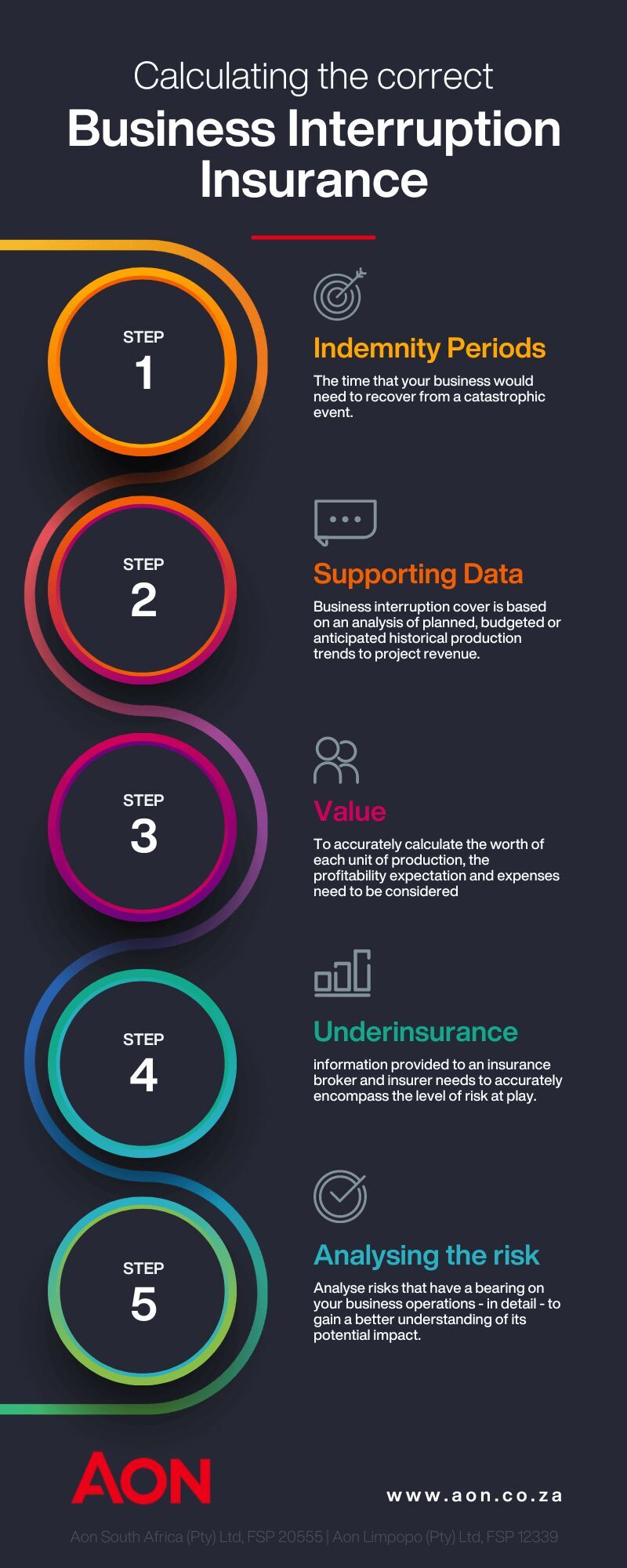
Bridging the financial gap caused by disasters.
Business Interruption is the second biggest risk facing organisations today according to Aon’s latest Global Risk Management Survey. In a world that is more volatile, the macroeconomic environment in which risks must be managed is in constant flux, while the velocity of risk evolution continues to intensify and forge greater interconnectivity between risks.
“At the junction where risks and business operations converge, business interruption presents a loss of income or profit suffered when operations are suspended or reduced as a result of direct or indirect (contingent) loss, such as through property damage or a cyber-attack. Many risks can prevent a business from trading – natural/weather disasters like flooding and fire, cyberattacks and supplier shortages are just some examples. These events have the potential to interrupt services and operations for an extended period, which means no income generation for the business while the bills continue to pile up. A business that closes operations for an extended period is at real risk of closing permanently without an insurance solution in place. An organisation might not only see a loss of revenues but also an increase in operational costs to maintain sales — often with both impacts occurring at the same time,” explains Milicent Msiza, a risk consultant at Aon South Africa
“This is where business interruption insurance presents a lifeline for businesses in crisis, safeguarding against revenue loss and enabling businesses to meet overheads and expenses such as rent, salaries and supplier payments. It aims to restore a business to its pre-disaster financial state by recovering from interruptions and bridging the financial gap caused by disasters, ensuring businesses can weather the storm and remain resilient to such hard knocks,” she adds.
Calculating the correct business interruption insurance value
While Business Interruption (BI) cover is likely to save your business in a worst-case scenario, calculating the correct value to insure your business for is complex, and equally crucial. It is essential to speak to an experienced BI broker for at least an annual review of your BI policy to make necessary adjustments that address the nuances of your specific line of business.
Aon unpacks some of the challenges and key considerations:
- Indemnity periods - This refers to the time that your business would need to recover from a catastrophic event, taking into consideration the reinstatement of the building as well as the sourcing of plant, equipment and the like. The length of the period would need to be sufficient to cover costs from the date of the incident until the business is no longer affected by the disruption. If the indemnity period runs out before the business is fully operational, the shortfall will not be covered, making it crucial to analyse the business sales cycle thoroughly.
- Supporting Data -When production levels vary, along with unpredictable demand, the BI claim becomes complex as the cover is based on an analysis of planned, budgeted or anticipated historical production trends to project revenue. When the loss period is lengthy or when the business lacks sufficient historical data to present a trend, the adjuster will need additional supporting data that can prove to be time-consuming. Identifying challenges upfront and committing the time and resources to support assumptions will increase the credibility of your supporting data and reduce the review period.
- Value – To accurately calculate the worth of each unit of production, the profitability expectation and expenses need to be considered. For example, if the business is seasonal, a trend over several years could establish a production and sales profile. A financial expert who’s familiar with the business and its industry might highlight industry trends, market changes or business-specific developments that indicate a higher level of growth going forward for the business during the damage period.
- Underinsurance – The cover provided by a BI policy is based on the information provided to an insurance broker and insurer, and if the information does not accurately encompass the level of risk at play, your business could potentially be significantly underinsured, providing cover that will not sustain the financial implications of a business interruption event.
Analysing the risk
“There are many events that could lead to a business interruption period, which is why it is imperative to analyse risks that have a bearing on your business operations - in detail - to gain a better understanding of its potential impact on your business,” says Milicent.
These risks could include but are not limited to:
- Cyber risk - Cyber threats and ransomware attacks have become more frequent, sophisticated and severe in the past four years, with impacts ranging from reputational and financial damage to critical operations being compromised. It is no surprise that it was rated the top risk in Aon’s Global Risk Management survey and is likely to be a pressure point for most businesses.
- Fire - Not all businesses will share the same level of risk when it comes to fire risk; the nature of your operations can determine whether the risk of fire poses a meaningful threat to your business operations.
- Supply Scarcity - Supply scarcity means equipment failures that would once have led to brief stoppages in the past can now potentially cause long delays due to the extended lead times of replacement parts. Many companies no longer consider repair and rebuild when determining the length of a stoppage; instead, the time required for the delivery of new machinery is the default.
- Natural Catastrophes - Aon’s Annual Climate and Catastrophe Insight report revealed global economic losses from natural catastrophes reached $380 billion in 2023. The extensive damage that comes with weather or climate-related events can be substantial and needs to be planned for.
- Geopolitical events - Geopolitical events such as conflicts and civil unrest provide ongoing risks and obstacles to business, especially in an election year where the risk of political unrest needs to be considered.
“Disruption events can come in many forms and affect reputation, customer trust, cash flows and much more, making business interruption a key concern for businesses. Traditionally, organisations looked at the possible disruptions caused by their own losses — for example, a fire, explosion, or natural catastrophe that might damage their premises. However, over the past years, companies have broadened their lens to include supply chain disruptions and risks related to losing customers, suppliers or utilities. BI has also become increasingly complex as the world has become even more volatile and interconnected.
“Both pre-loss preparedness and post-loss reaction are critical in limiting the impact of business interruption. Organisations should regularly revisit and update their crisis management and business continuity plans with their risk advisors and brokers. These plans substantially reduce the impact of an event and can be a major differentiator in whether a company recovers from a disruption. By analysing exposures, taking steps to address risk - of which insurance is one important component - and establishing a strategy for assembling a claim quickly and accurately, businesses can better prepare themselves for the threat of business interruption,” concludes Milicent.
-- ENDS --
About Aon
Aon plc (NYSE: AON) exists to shape decisions for the better — to protect and enrich the lives of people around the world. Our colleagues provide our clients in over 120 countries and sovereignties with advice and solutions that give them the clarity and confidence to make better decisions to protect and grow their business.
Follow Aon on LinkedIn, Twitter,Facebookand Instagram. Stay up-to-date by visiting the Aon Newsroomand sign up for News Alerts here.
Please let me know if there is anything more you need.
Get new press articles by email
We submit and automate press releases distribution for a range of clients. Our platform brings in automation to 5 social media platforms with engaging hashtags. Our new platform The Pulse, allows premium PR Agencies to have access to our newsletter subscribers.
Latest from
- Boplaas Celebrates Top Honours In Winemag Ten Year Old Wine Report For Cape Vintage Reserve
- How ERP Systems Help SMEs Strengthen Financial Compliance And Operational Visibility
- Payflex Insights Reveal How Consumers Use BNPL While Managing Debt And Seasonal Spending
- Bridging The Gap Between Energy Project Ambition And Bankability Across Africa Power Sector
- DStv Schools Netball Challenge Expands Opportunities For Young Players Across South Africa
- Chevron Appoints Emmanuelle Garinet To Lead Exploration Across Americas And Sub Saharan Africa
- Shoprite Community Garden Competition Highlights Local Food Security Initiatives Across South Africa
- SADiLaR Workshop Showcases Digital Humanities Tools For African Language Research And Teaching
- Wesgro Trade Programme Links International Buyers With Western Cape Businesses
- Why Brand Impact And Strategic Creativity Matter More Than Campaign Views In Modern Marketing
- Sanitech Invites Mining Partners To Test South African Developed Waste Treatment Solution
- How The Five Hour Rule Helps Professionals Stay Competitive Through Continuous Learning
- Why Data Protection And Cybersecurity Are Essential To Building Consumer Trust In The Digital Economy
- African Energy Week 2026 To Convene Ministers And Industry Leaders In Cape Town
- Cyber Attacks Expose Growing Risks To Africa Healthcare Systems And Sensitive Patient Data
The Pulse Latest Articles
- Totalsports Two Oceans Marathon Powered By Byd (March 13, 2026)
- Byd Powered Car Of The Year Finalist Evaluation With Mobile Phev And Ev Charging (March 6, 2026)
- Strategy Is Easy. Execution Is Everything (March 5, 2026)
- The Paradox Of Leadership: Ntombizone Feni’s First Year As Ceo (March 4, 2026)
- Beyond The Pit: Why Mining Partnerships Are Being Redefined (March 2, 2026)