
The role of mentorship as a strategy in South Africa’s inclusive leadership landscape
Written by: Henkel South Africa Save to Instapaper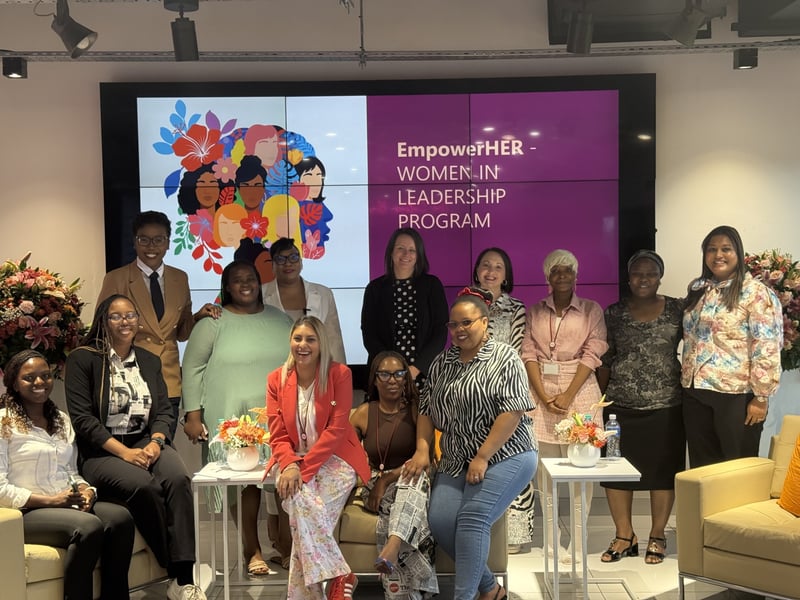
By Natasha Naidoo: Director Industrial Adhesives at Henkel South Africa
In South Africa, mentorship is more than a developmental tool. It is increasingly understood as a bridge to equity, resilience and long-term leadership sustainability. Across majority of industries, women remain underrepresented in senior and executive roles, often encountering systemic barriers that slow progression despite experience and capability. Against this backdrop, mentorship has emerged as one of the more practical mechanisms for strengthening inclusive leadership pipelines.
Women in leadership mentorship initiatives offer insight into how structured support can influence leadership outcomes. When mentorship is treated as strategy rather than symbolism, it begins to shape not only individual progression, but also how leadership capacity is built and sustained.
Purpose and impact of structured mentorship
Structured mentorship recognises that leadership journeys are not linear. Women at different stages of their careers face distinct challenges, and effective mentorship responds to this reality rather than applying a uniform solution.
Earlier in their leadership journeys, many women require support that builds confidence, visibility and access to decision-making environments. At more senior levels, the focus often shifts to strategic influence, peer engagement and navigating organisational complexity. Addressing both stages within mentorship design helps sustain leadership pipelines and reduces attrition at critical transition points.
Mentorship as a driver of resilience
Mentorship is often described as knowledge transfer. In practice, its value lies elsewhere. It creates space for perspective, judgement and challenge - qualities that are difficult to develop through formal training alone.
More evolved mentorship models increasingly incorporate reciprocal elements, allowing learning to move in both directions. Emerging leaders bring insight into changing workplace expectations, while experienced leaders offer institutional context and strategic perspective. This exchange broadens organisational thinking and supports more resilient leadership decision-making.
Beyond symbolic interventions
Not all mentorship initiatives deliver meaningful change. Informal or lightly structured approaches often struggle to move beyond intent. By contrast, mentorship that is deliberately designed, facilitated and supported is more likely to influence progression and retention.
Confidence, communication and leadership presence are consistently identified as areas where women benefit from targeted support. When mentorship addresses these dimensions intentionally, its impact becomes tangible. Measurement matters. Tracking outcomes such as
progression, retention and leadership influence shifts mentorship from a perceived “soft” initiative to a strategic leadership tool.
Shaping leadership culture
One of mentorship’s most significant contributions is cultural. Creating environments where women can lead with confidence, collaborate across functions and challenge established norms begins to reshape how leadership is practised.
This shift is gradual and uneven, but it accumulates. As women progress, many assume mentorship roles themselves, reinforcing inclusive leadership behaviours across teams and organisations. Over time, mentorship becomes embedded not as a program, but as part of leadership culture.
Mentorship as a strategic lever
South Africa’s inclusive leadership landscape remains uneven. Mentorship alone will not resolve this. But when applied deliberately, it addresses gaps that policy and recruitment efforts often leave untouched.
Mentorship does not offer quick fixes. It is slower than slogans and less visible than targets. As a strategy, however, it creates the conditions for inclusive leadership to develop with consistency and credibility, strengthening organisations while contributing to a leadership landscape that better reflects the country itself.
About Henkel
With its brands, innovations and technologies, Henkel holds leading market positions worldwide in the industrial and consumer businesses. The business unit Adhesive Technologies is the global leader in the market for adhesives, sealants and functional coatings. With Consumer Brands, the company holds leading positions especially in laundry & home care and hair in many markets and categories around the world. The company's three strongest brands are Loctite, Persil and Schwarzkopf. In fiscal 2024, Henkel reported sales of more than 21.6 billion euros and adjusted operating profit of around 3.1 billion euros. Henkel’s preferred shares are listed in the German stock index DAX. Sustainability has a long tradition at Henkel, and the company has a clear sustainability strategy with specific targets. Henkel was founded in 1876 and today employs a diverse team of about 47,000 people worldwide – united by a strong corporate culture, shared values and a common purpose: "Pioneers at heart for the good of generations.” More information at www.henkel.com
About Henkel South Africa
Henkel in the South Africa was established in 1951 and has since grown with almost 200 employees. In South Africa, Henkel operates one plant for Adhesive Technology products in Johannesburg and three offices in Bedfordview (Johannesburg), Alrode (Johannesburg), and Durban and Henkel in South Africa covers both global business units: Consumer Brands and Adhesive Technologies. In line with the company’s focus on innovation and customization, Henkel South Africa offers locally relevant leading products that cater to the country’s specific needs and position Henkel as a key player, particularly with top brands in textured hair care such as Got2b Glued and Consumer Adhesives such as Pritt - the leading glue stick brand with Henkel South Africa being in the top 3 of most Pritt sticks sold globally - as well as customized Adhesive products for the automotive mining and cementing industry. In 2007, the Henkel South Africa team collaborated with a local NGO to build a center for children and created a space for early learning and development to give back to those in need. Through donations and volunteer work from Henkel employees and Henkel South Africa, 120 children from ages three to five every year now have a place to learn at Tamaho Early Learning & Development Center, Katlehong, Johannesburg. A second building is currently being established that will allow an additional 120 children each year to access a learning environment.
Submitted on behalf of
- Company: Henkel South Africa
- Contact #: 0735462916
- Website
Get new press articles by email
Kusudi Holdings is a 100% youth- and black-owned media and communications company established in 2022. The name “Kusudi”, derived from Swahili, means “Purpose” — a principle that defines our approach to every project. We specialise in strategic public relations, corporate communications, and integrated marketing designed to elevate brand visibility and credibility. Our purpose-driven model ensures... Read More
Latest from
- The Business Behind the Booth - How Women DJs Are Building Careers in South Africa's Creative Economy
- 30 Years of Harley & Muscle - Milanese duo chooses Limpopo’s Vinyl Camp 2026 for exclusive African vinyl set
- Henkel South Africa advances carbon neutrality with major emissions reduction at Alrode factory
- Culture as a competitive advantage - Why consistency matters more than ever
- Vinyl Camp spotlights Lady More as a voice for freedom, community and culture this Human Rights Month
- Vinyl Camp 2025 - A Soulful Weekend of Music, Culture, and Connection in the Heart of Limpopo