
AmberMacs Expo shows the way forward
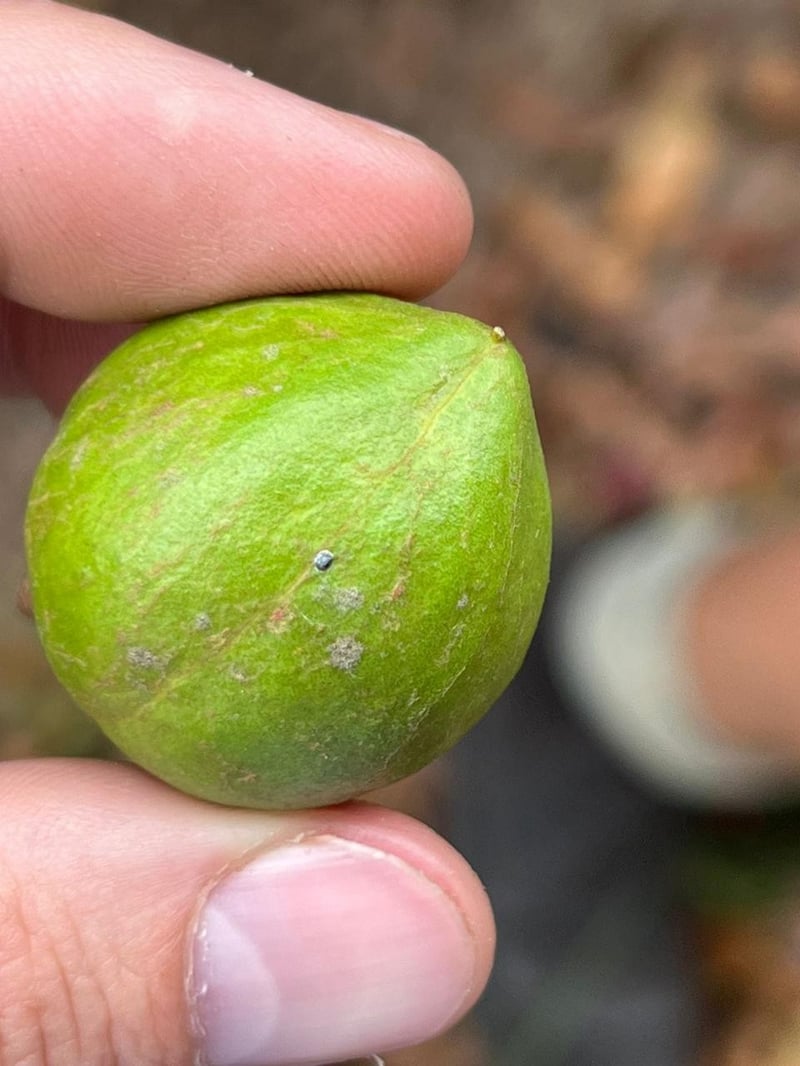
South Africa remains one of the world’s leading macadamia exporters, producing around 30% of global supply from an annual crop of approximately 85 000 tonnes. The industry supports an estimated 97 500 permanent and seasonal jobs and continues to play a growing role in the country’s agricultural economy. But growth also brings challenges: market saturation, shifting trade dynamics and climate-related risks call for new solutions and greater collaboration.
It is against this backdrop that the fifth AmberMacs Macadamia Expo will take place from 5 to 6 February 2026 in White River. The event has become South Africa’s largest specialised macadamia platform and a key meeting point for producers, researchers, input suppliers and industry stakeholders across the value chain.
This year’s programme is focused on practical relevance. Sessions include a macroeconomic outlook by economist Dawie Roodt, alongside presentations on soil correction, biological insect management and the application of plant physiology in irrigation planning.
According to Gert van Tonder, InteliGro’s Area Manager for the Lowveld and KwaZulu-Natal, the value of the expo lies in its ability to translate complexity into practical insight.
“Within two days, producers are exposed to proven approaches and technologies that can be applied directly on-farm,” he says. “The strength of the Expo is the integration of research, innovation and real-world farming experience.”
A GLOBAL MARKET IN TRANSITION
South Africa’s macadamia industry has expanded significantly over the past decade, particularly in Mpumalanga, Limpopo and KwaZulu-Natal. Producers are now operating in a global market that has entered a more mature phase, where pricing remains under pressure and factors such as logistics, shipping costs and tariffs carry increasing weight.
Van Tonder notes that South Africa remains the world’s largest macadamia producer, followed by Australia and China, although China continues to expand its own plantings rapidly.
“There are clear signs of recovery after a difficult price cycle,” he says, “but progress is gradual and uneven. Recent exceptional rainfall has added further strain for many producers.”
LONG-TERM RETURNS START IN THE SOIL
Macadamia orchards are long-term investments, often spanning 30 to 50 years, and require careful soil preparation and sustainable management from the outset.
Schalk Lombaard, Technical Marketing Specialist for Plant Nutrition at InteliGro, warns that short-term cost savings can have lasting consequences. “Comparative research shows that cutting back on nutrition or crop protection may reduce input costs in the short term, but it ultimately impacts yield potential and nut quality,” he explains.
Lombaard emphasises that soil analysis provides a critical baseline for long-term decision-making. Soil pH, phosphate levels and water quality are particularly important, as macadamias belong to the Protea family and are sensitive to excessive phosphate.
“A holistic approach is essential,” he adds. “Beyond chemistry, we also focus on soil biology. In orchards established on former tobacco soils in the Lowveld, for example, biological strategies are often required to correct imbalances and restore long-term tree health.”
INTEGRATED PEST MANAGEMENT GAINS MOMENTUM
According to Martin Booyens, Technical Marketing Specialist for Biological Solutions at InteliGro, the future of pest and disease management in macadamias lies in well-planned, integrated programmes designed for long-term sustainability.
“Stricter regulatory requirements, including GLOBALG.A.P. standards and EU residue limits, are accelerating the adoption of biological approaches,” he says. “This is not only about compliance, but about building resilient orchard systems that support resistance management and long-term productivity.”
Booyens explains:
- In the Highveld and parts of the Lowveld, stinkbugs remain a key concern. Egg parasitoids are already delivering encouraging results by suppressing populations early in the season.
- In KwaZulu-Natal, the macadamia nut borer continues to be a priority pest. Egg parasitoids such as Trichogrammatoidea cryptophlebiae, as well as entomopathogenic nematodes, are being incorporated into integrated control programmes. Correct timing, particularly targeting the first generation, is critical to achieving season-long control.
- Thrips present a more complex challenge, especially in orchards located near citrus plantings. Here, predatory mites show promise as a long-term biological solution.
“Biological control is not a quick fix,” Booyens cautions. “It requires planning, patience and a systems-based approach, particularly in young orchards. Events like the AmberMacs Expo help producers understand how to integrate these tools responsibly and effectively.”
COLLABORATION UNDERPINS SUSTAINABILITY
While climate variability and logistical constraints, particularly at ports, remain ongoing challenges, there are signs of stabilisation in certain input costs and growing collaboration across the value chain.
“Success starts on the farm,” says Van Tonder, “but long-term sustainability is built through shared knowledge and cooperation across the industry.”
Further information on exhibitors, seminars and speakers is available on the AmberMacs Expo website at ambermacs.com/. Online registration is compulsory and limited to 3,000 visitors. Tickets cost R75 per person via Quicket and are valid for both days.
Release information
Issued on behalf of
InteliGro
Media contact
Isabeau Media
Isabeau Botha