
Parliamentary Portfolio Committee Meeting to persuade the Minister of Agriculture to stop the practice of exporting live animals by sea
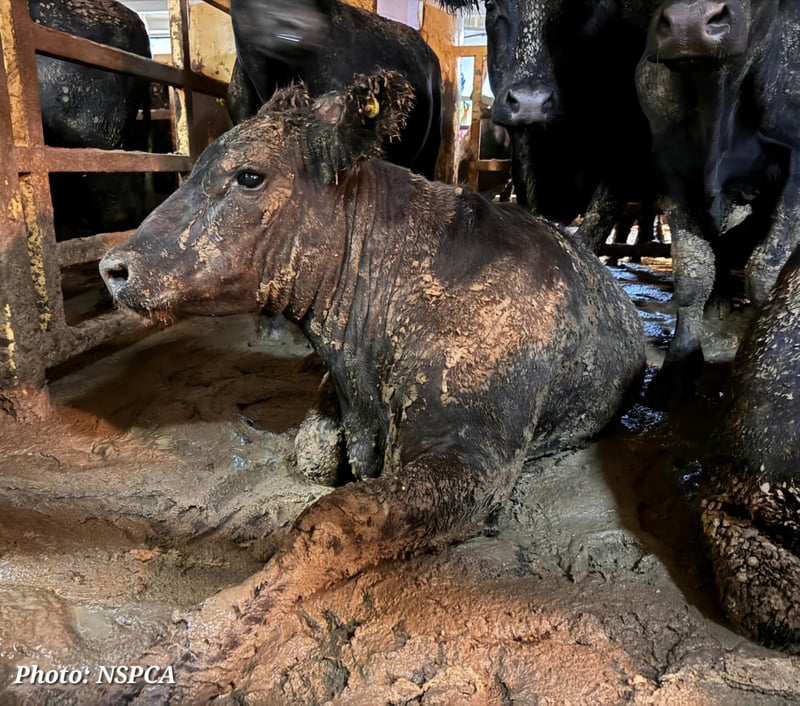
On 18 November 2025, Stop Live Exports South Africa (SLESA) presented to the Parliamentary Portfolio Committee on Agriculture to persuade the committee to stop the cruel practice of exporting live animals by sea.
SLESA is a non-profit organisation dedicated to preventing animal cruelty and promoting animal welfare. As members of the Farmed Animal Alliance and the Cape Animal Welfare Forum, they represent over 70 animal protection organisations nationwide on this issue. SLESA works in partnership with other animal protection organisations, veterinarians, animal welfare experts, legal specialists and international organisations.
SLESA’s co-founder, Michelle Taberer, says that they are deeply concerned about the welfare, ethical, economic and environmental impacts of exporting live South African animals by sea for slaughter. “We approached the Parliamentary Portfolio Committee to prevent government’s proposed formalisation of this cruel and unnecessary practice in law,” she says. “We took the Members through the many reasons why live exports cannot be regulated. The Committee afforded us two full hours to address them on this critical matter, which is significant for a briefing by an animal protection group. There was high engagement during the session, and some very tough questions from the MPs – disappointingly, only around the economics of the matter, considering that the Ministry has an equal responsibility to ensure animal welfare. But it seems as if the MP’s view animal suffering as an “accepted consequence” of commerce.
John Steenhuizen, the Minister of Agriculture, is the state official responsible for protecting animals from cruelty and administering the Animal Protection Act (APA). SLESA’s goal was for the committee to use their powers to stop the minister from introducing laws that would give licence to the promotion of the live export trade and instead ban the practice outright. It is a fact that when countries have attempted to use regulations to protect animals transported by sea, these attempts have always failed.
Taberer says, “Many countries have tried to regulate welfare standards at sea, as the Minister is attempting now, but they have all failed, as once a ship leaves the harbour there is little or no enforcement of the regulations that have been set,” she says.
Tony Gerrans, also representing SLESA, says, “The export of live animals from South Africa, primarily sheep to the Middle East and cattle to Mauritius, both countries with poor animal welfare laws, is inherently cruel as it involves confining animals for extended periods of time in harsh and unnatural conditions that give rise to significant animal welfare concerns. On land, South Africa’s law prohibits any animal transportation for longer than 18 hours at a time, while these trips by sea can take three weeks.”
During these harsh journeys, South African animals are subjected to prolonged periods of suffering, neglect and confinement in unhygienic and cruel conditions. “The welfare concerns arise from the animals being confined for long periods of time in filthy and overcrowded conditions. The unnatural environment at sea, including the vessel’s movement and noise, stresses the animals, while injuries, poor diet and alarming sanitary conditions lead to infection and disease. There is also a marked lack of adequate veterinary care on these transport vessels,” he explains.
“Often, the oldest category of shipping vessels is used, and these ships are not designed for transporting live animals. There is a long history of accidents that lead to the animals’ drowning or being killed by fire, heat, starvation or being crushed inside an overturned vessel,” says Gerrans.
A video was presented to the Committee, specially produced for this briefing by well-known Australian veterinarian Dr Lynn Simpson, who has accompanied 57 live export shipments in her career. In it, she informs the Committee Members that in her professional opinion as an experienced live export veterinarian “there is no way this trade can be fixed or managed to provide an acceptable risk to the animals involved” and concludes that “mass numbers of animals cannot be safely and reliable exported long distance by sea without experiencing unnecessary suffering”.
Taberer says, “We believe that by trying to formalise this practice in law, the minister is, in fact, introducing new harms to animals, and by doing so, is not fulfilling its role to protect animals from unnecessary suffering, which is his duty under the APA. We asked that the committee exercise its oversight powers to urge the Minister to withdraw the draft Live Animal Export Regulations and to introduce new regulations that prohibit live animal export by sea, in line with South Africa’s Animals Protection Act and international best practice,” she says.
Section 2 of the Animals Protection Act of SA, which is the Minister’s duty to uphold, prohibits:
- Overloading, neglecting or confining animals in a way that causes suffering
- Keeping animals in dirty or parasitic conditions
- Exposing animals to excessive heat or noxious fumes.
“By promoting live animal export, the Minister acts contrary to the intent and duty of the Act, as it is known that animals are exposed to all these conditions on live export vessels.”
The economic argument for live animal export is also flawed, explains Taberer. “Reports from the NSPCA suggest that gains are concentrated among a few large commercial exporters and do not benefit small farmers or rural communities. A recent study showed that exporting carcasses is ‘far cheaper and better for the environment’. “Local processing and abattoir jobs are lost when animals are exported live rather than as finished products. The processing value chain should not be offshore, as jobs and investment need to be in South Africa,” she says.
“This cruel practice is not popular with the vast majority of South Africans. We presented the committee with the results of the recent public participation process, showing that 95% of respondents oppose live exports completely. We also highlighted that should these regulations be gazetted, animal protection organisations will likely launch a legal challenge, diverting public funds from more productive uses,” she says. Global animal protection organisations have warned Minister Steenhuizen that his attempts to promote and regulate live export will only undermine South Africa’s international reputation as a reliable and ethical supplier in the global market.
To watch the livestream presentation to the Parliamentary Portfolio Committee on Agriculture, click here: https://www.youtube.com/watch?v=9kN81H4YFLU
Release information
Issued on behalf of
StopLiveExportSA
Media contact
T/a Soapbox Communications
Inky Dresner