
Balancing Sasria and PTS Cover in an Uncertain World
Balancing Sasria and PTS Cover in an Uncertain World
Businesses Need a Layered and Strategic Approach to Political Violence and Civil Unrest Risks
Political violence and civil unrest remain a significant concern for businesses operating in South Africa and across the continent.
As organisations navigate a changing geopolitical and socio-economic environment, insurance programmes are once again coming under scrutiny, particularly around Property Terrorism and Sabotage (PTS) cover and the role of Sasria SOC Ltd.
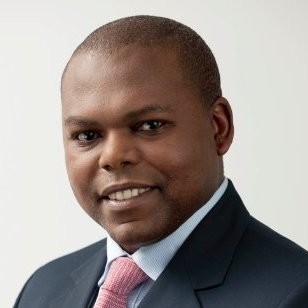
According to Sibusiso Ntuli, Head of Large and Enterprise Clients at Aon South Africa, the conversation around political violence insurance has shifted considerably over the past few years.
Following the widespread unrest and riots experienced in South Africa during 2021, many businesses were forced to rethink how they approach risk transfer and insurance capacity.
The Changing Role Of Sasria
Most South African businesses already carry cover through Sasria SOC Ltd, which was established by government decades ago to provide protection against risks such as civil commotion, riots, strikes, public disorder and terrorism.
The structure was designed to alleviate the burden on conventional insurers and provide affordable protection to the broader market.
However, the events of July 2021 placed significant pressure on Sasria’s balance sheet.
The scale of the losses resulted in a substantial depletion of reserves and required additional government support.
During this period, Sasria withdrew its Wrap Cover product and increased pricing to restore sustainability.
“The market found itself in a position where many organisations had to make difficult decisions around affordability and risk appetite,” says Ntuli.
“In many cases, businesses opted to retain only Sasria cover and remove standalone PTS cover from their insurance structures.”
For multinational organisations operating outside of South Africa, however, PTS cover often remained essential due to differing political violence exposures across territories.
A Softer Market Creates New Opportunities
Fast-forward to 2026, and the environment has evolved once again.
Political stability in South Africa has improved relative to the uncertainty experienced in previous years, helping to restore confidence within global insurance markets.
At the same time, the PTS market has softened, creating more favourable pricing conditions.
This shift has reopened the conversation around combining Sasria and PTS cover as part of a broader risk management strategy.
“Businesses should not simply purchase cover because it is cheap or because it has always existed,” Ntuli explains.
“The focus should be on understanding the actual exposure and structuring cover around that risk.”
The nature of the business itself plays a critical role in determining exposure levels.
Businesses must have a clear, well-defined understanding of their risk profile, including how their exposures aggregate across locations and operations.
Retailers, for example, may face significantly higher risks linked to looting, public unrest and disruption than businesses operating in lower-risk industrial sectors.
Manufacturing facilities may present a different risk profile to logistics operators or mining operations.
Building A Layered Risk Structure
For larger organisations, the discussion increasingly centres around creating a consolidated insurance tower that incorporates both Sasria and PTS solutions where appropriate.
“It’s about understanding where the risks sit within the organisation and determining whether additional PTS cover is needed to supplement Sasria,” says Ntuli.
“In many cases, a hybrid structure provides a more effective and resilient solution.”
Geographic exposure is another major consideration for multinational businesses.
Organisations operating across Africa and other volatile regions need to assess each territory individually rather than applying a blanket approach across their operations.
“The risk profile of a business operating in Namibia is very different to one operating in the Democratic Republic of Congo, for example,” Ntuli notes.
“Political stability, societal conditions, labour relations and geopolitical tensions all influence how underwriters assess risk.”
Global geopolitical developments are also continuing to influence the availability and pricing of political violence insurance.
Tensions in parts of Europe and the Middle East, sanctions-related complications and disruptions to marine and supply chain operations have all contributed to a more complex underwriting environment.
As a result, marine insurers have adjusted their appetite for war-related exposures in certain regions, particularly in high-risk shipping corridors.
Businesses with operations or supply chains linked to these areas are increasingly needing to assess contingency planning and insurance adequacy in greater detail.
“Organisations need a clear, structured response to political violence and civil unrest. Strategies should be data-driven and incorporate loss scenario analysis, while aligning with each organisation’s risk tolerance and balance sheet strength. By bringing these elements together, clients are better able to understand how an integrated structure will respond in the event of an incident,” says Ntuli.
Sasria’s Wrap Cover Returns
A significant recent development for the South African market has been the reintroduction of Wrap Cover by Sasria SOC Ltd.
The product is structured as an Excess of Loss (XOL) offering above Sasria’s R500 million primary coupon[1] and is designed for large corporates with concentrated asset bases or substantial business interruption exposures.
“Its return signals Sasria’s renewed capacity to participate more meaningfully in large-scale risk placements,” says Ntuli.
The reintroduction comes at a time when many businesses are reassessing the adequacy of their political violence insurance arrangements amid ongoing economic pressure, social instability, evolving geopolitical uncertainty and approaching local elections.
Understanding The Gaps
Ntuli stresses that organisations should engage closely with their brokers to conduct a detailed review of their risk landscape and insurance structures.
“There is no one-size-fits-all solution,” he says.
“Businesses need to understand their operational footprint, their employee relations, their societal exposure and the geopolitical environment in which they operate. All of these factors ultimately feed into the underwriting process.”
For many organisations, the optimal solution may involve a layered approach that combines Sasria cover with additional PTS capacity to address potential gaps and strengthen resilience against increasingly complex political violence risks.
Taking a proactive approach to reviewing political violence exposures may prove critical in ensuring long-term operational continuity and financial protection.
Ends…
Disclaimer
The contents hereof should not be construed as legal advice on any matter.
You should not act or refrain from acting on the basis of any content included in this communication without seeking professional legal counsel.
This communication does not constitute or create a lawyer-client relationship between us.
About Aon
Aon plc (NYSE: AON) exists to shape decisions for the better — to protect and enrich the lives of people around the world.
Our colleagues provide our clients in over 120 countries and sovereignties with advice and solutions that give them the clarity and confidence to make better decisions to protect and grow their businesses.
Follow Aon on LinkedIn, Twitter, Facebook and Instagram.
Stay up-to-date by visiting the Aon Newsroom and sign up for News Alerts here.
Media Contact
Deidre Beylis
This email address is being protected from spambots. You need JavaScript enabled to view it.
+27 84 426 0410
Release information
Issued on behalf of
Aon SA
Media contact
Teresa Settas Communications
Thuli Sikhosana