
South Africa Electricity Generation Falls 8.7% Year on Year in April 2026
Written by: BizCommunity Editor Save to Instapaper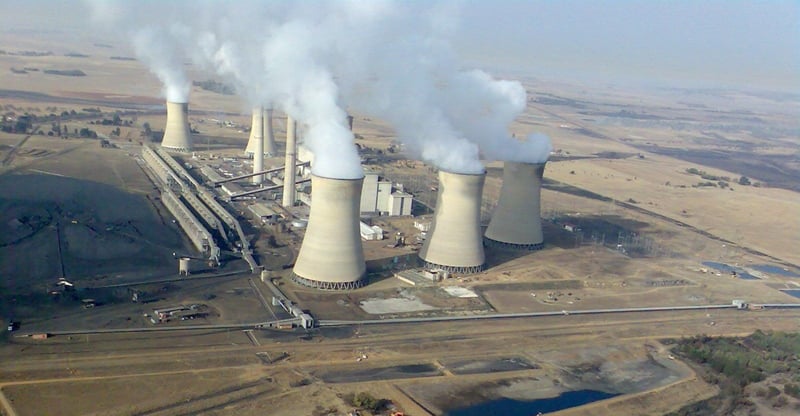
Eskom's electricity production in April 2026 was 14.7% below the pre-Covid (2019) average, highlighting the extent of the structural decline in demand and supply. Image credit: Gerhard Roux , CC BY-SA 4.0, via Wikimedia Commons

Stats SA’s latest data for April indicates a continued decline in electricity production in South Africa.
Downward spiral
Seasonally adjusted real electricity generation fell by 8.7% year-on-year (y-o-y) in April 2026, marking a sustained contraction in annual terms over recent months.
On a month-on-month (m-o-m) basis, production declined by a further 1.7%.
The key takeaway is that, despite the absence of loadshedding, both electricity production and consumption remain on a downward trend.
Electricity production in April 2026 was 14.7% below the pre-Covid (2019) average, highlighting the extent of the structural decline in demand and supply.
January to April (year-to-April), electricity production was 6.4% lower compared to the same period last year.
For the 12 months to April 2026 (May 2025 to April 2026), production was 4.7% lower compared to the preceding 12-month period.
“The sustained year-on-year contraction, coupled with output levels well below pre-Covid benchmarks, suggests that weak underlying demand, likely reflecting subdued industrial activity in the economy, remains a defining feature of the electricity landscape.
“This will put pressure on Eskom’s revenue and does not support single-digit tariff increases in future,” says Lourens.
The promise of smelters
But all is not lost, as Lourens points out, with early signs that industrial demand could begin to recover.
Ferrochrome smelters operated by Glencore-Merafe and Samancor Chrome could return, depending on approval of changes to their negotiated pricing agreements (NPAs), which could increase electricity consumption.
“Importantly, while the system remains relatively tight, Eskom has indicated that it retains approximately 2,000 MW of capacity in cold storage that can be brought back online with relative ease should demand increase.
“This available buffer suggests that additional load from the smelters can be accommodated without materially compromising system stability,” says the economist.
Market reform
The power utility is also opening itself up to a new electricity market framework, and the scale of policy reform currently underway is notable.
This is occurring alongside mounting pressure on existing industrial customers, many of whom face significant financial strain and may be unable to continue operating without a relief in electricity tariffs.
Against this backdrop, several key policy and regulatory processes are currently progressing through the National Energy Regulator of South Africa’s (Nersa) public consultation framework.
These processes reflect a comprehensive restructuring of both market design and pricing arrangements, with significant implications for generators, traders, and large industrial consumers.
Lourens says, “The scale and pace of policy reform signal a fundamental transition in South Africa’s electricity market.
“While these reforms are necessary to enable a more competitive and efficient system, they introduce a period of uncertainty for market participants.
“For energy-intensive users in particular, rising electricity costs and evolving pricing frameworks continue to pose a material risk to operational viability.
“In this context, the key challenge is to balance reform with affordability and competitiveness.
“Sustaining system stability while ensuring that industrial users remain viable will be critical to supporting broader economic recovery and growth.”
Get new press articles by email
We submit and automate press releases distribution for a range of clients. Our platform brings in automation to 5 social media platforms with engaging hashtags. Our new platform The Pulse, allows premium PR Agencies to have access to our newsletter subscribers.
Latest from
- Threads for iKasi 1,000 Uniforms Initiative Supports 1,828 Learners at Zitikeni Secondary School
- Integrating Loyalty Data With CRM POS And Analytics To Reveal Actionable Customer Insights
- Agency Scopen Finds Brand Distinctiveness Climbs To Top Tier Of Marketer Priorities
- BulkSMS Honoured by WASPA for Sustained Membership and Industry Commitment
- Ntloko Reflects on New Opportunities for Young Creatives in South Africa
- Amazon Launches Prime in South Africa With First Prime Day Scheduled for 23–29 June 2026
- Allan Gray Entrepreneurship Challenge Returns For 10th Year To Inspire Southern African Youth
- Three Common Financial Mistakes Entrepreneurs Make Under Pressure And How To Avoid Them
- Limp Bizkit Announce FNB Stadium Johannesburg Show On 13 December 2026
- Enterprise Capital Conference To Mobilise Partners For Future‑Fit Skills And Tech Innovation
- Thinkroom Makes Second Seed Investment In Kloset Klub Backing Phumi Körber
- Masiqhakaze Science Resource Centre Expands Ardagh for Education Network to Three Sites
- Auria Senior Living Teams With Sam Hospitality for Onsite Staff Training Across Premier Communities
- Jacobs Launches Wunderbar Project To Strengthen Coffee Farming and Community Resilience
- Omnia Reports 21% Rise In Headline EPS To R8.49 And Declares Special Dividend
The Pulse Latest Articles
- The Hidden Cost Of Living Crisis Is No Longer Inflation - It Is Energy (June 4, 2026)
- Hisense Powers Up For Fifa World Cup 2026 With New Tv Launch (June 4, 2026)
- Finfind Partners With The Silulo Foundation To Expand Funding Access For Underserved Msmes (June 2, 2026)
- You Can’t Measure What You Can’t Define – Or Can You? (part 3 Of 5) (June 2, 2026)
- South African Women Are Missing This Essential Nutrient (May 20, 2026)